

Running a business means doing more work than the hours allow. This guide shows how to use ChatGPT to grow a business by covering what the tool does well, the best use cases in marketing, sales, support and productivity, a five-step rollout plan, copy-ready prompts, and the mistakes to avoid. You can start applying it this week, with no technical background.

Table of Contents
What Is ChatGPT for Small Business?
ChatGPT for small business means using OpenAI’s conversational AI to draft content, organize ideas, summarize information and speed up routine tasks. It does not replace your judgment, your industry knowledge or your customer relationships. Think of it as a fast assistant that produces first drafts, which you review and improve.
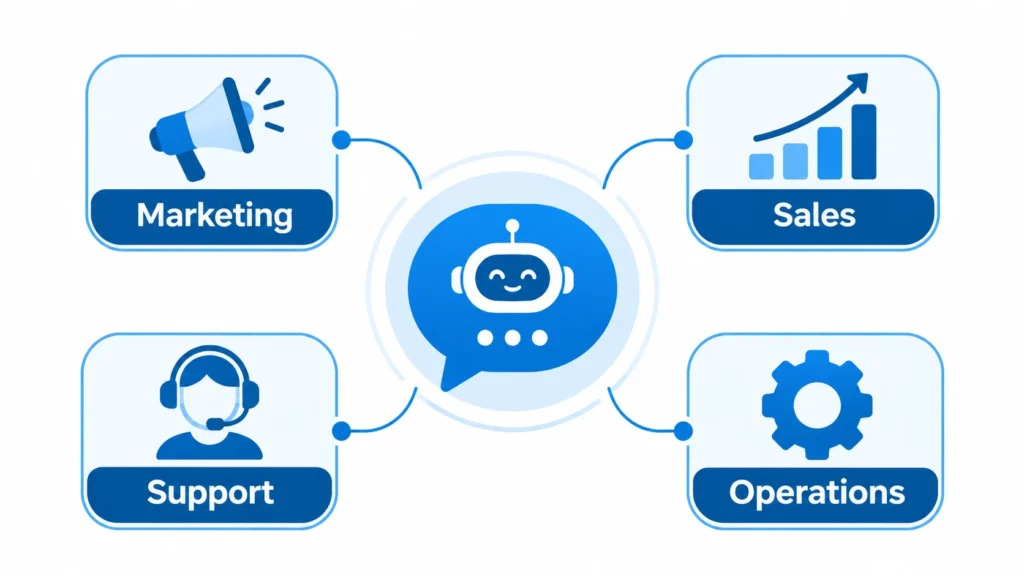
ChatGPT Business Use Cases That Support Growth
1.Marketing and Content
ChatGPT marketing strategies usually begin with planning. Ask it for a content calendar, blog outlines, email subject lines, social posts or several versions of ad copy. Share your audience and brand voice first, so the results sound like you. This is a practical way to use ChatGPT for business marketing without hiring a full team.
2.Sales and Customer Acquisition
For ChatGPT for sales and marketing teams of one, the biggest gains come from writing speed. It can draft outreach emails, follow-up sequences, product descriptions and answers to common objections. To use ChatGPT for customer acquisition, give it a clear customer profile and ask for messages that address one specific problem.
3.Customer Support
Use it to draft FAQ answers, reply templates and help-center articles. Always review replies before sending, especially for refunds, legal issues or complaints.
4.Productivity and Operations
ChatGPT for business productivity covers meeting summaries, standard operating procedures (SOPs), job descriptions, spreadsheet formulas and research summaries. These tasks are small, but they add up across a week.
| Use Case | Example Task | Best For |
|---|---|---|
| Marketing | Monthly content calendar | Consistent publishing |
| Sales | Follow-up email sequence | Lead nurturing |
| Support | FAQ and reply templates | Faster response times |
| Operations | SOPs and meeting summaries | Saving admin time |
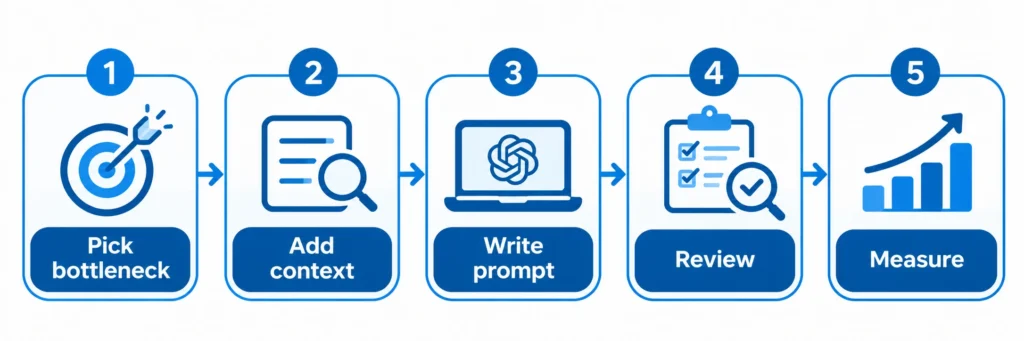
How to Use ChatGPT to Grow a Business: 5 Steps
This is how to grow a small business with AI without getting overwhelmed.
- Pick one bottleneck. Choose a single slow or repetitive task, such as writing emails or planning content.
- Give context. Tell ChatGPT your business type, audience, goal and tone of voice.
- Write a specific prompt. Include the task, format, length and any examples.
- Review and edit. Check facts, prices, claims and tone. You are responsible for what you publish.
- Measure and refine. Track one result, such as hours saved, reply rate or leads, then improve the prompt and repeat.
Start with one task for two weeks. Add another only after the first one saves time or improves results.
ChatGPT Prompts for Business Owners
Good prompts are specific. Replace the brackets with your own details:
- Customer profile: “Act as a marketing strategist. Create a customer profile for [product] aimed at [audience], including problems, goals and objections.”
- Content ideas: “Suggest 10 blog topics for [business type] that answer questions customers ask before buying.”
- Outreach email: “Write a short, friendly email to [customer type] introducing [offer]. Focus on [one benefit]. Keep it under 120 words.”
- Process document: “Turn these notes into a step-by-step SOP a new employee can follow: [notes].”
- Feedback: “Review this sales page and list five ways to make the value clearer: [text].”
If the first answer is generic, add details about your audience, offer and tone, then ask again.
Common Mistakes to Avoid
- Publishing without editing. AI output can contain errors or sound generic. Add your own examples and expertise.
- Sharing sensitive data. Avoid pasting customer personal information, passwords or confidential financials. Review the privacy settings and policies of the plan you use.
- Trusting every fact. ChatGPT can state incorrect information confidently, so verify statistics, laws and prices.
- Using vague prompts. Unclear requests produce unclear answers.
- Ignoring rules. Check advertising, disclosure and data-protection requirements that apply in your country.
Conclusion
Knowing how to use ChatGPT to grow a business comes down to focus: pick one task, give clear context, review the output and measure the result. Used this way, it saves time and helps you reach more customers, while your expertise keeps the work accurate and trustworthy. Choose one prompt from this guide and test it today.