
Email marketing for restaurants means sending permission-based messages that bring guests back for another meal. The article explains why the channel works, how to build a consent-based email list, which six emails to send first, how to plan newsletter content, when to send, what to look for in tools, and how to measure revenue instead of vanity metrics.
Table of Contents
Email Marketing for Restaurants: A Practical Guide to Filling More Tables
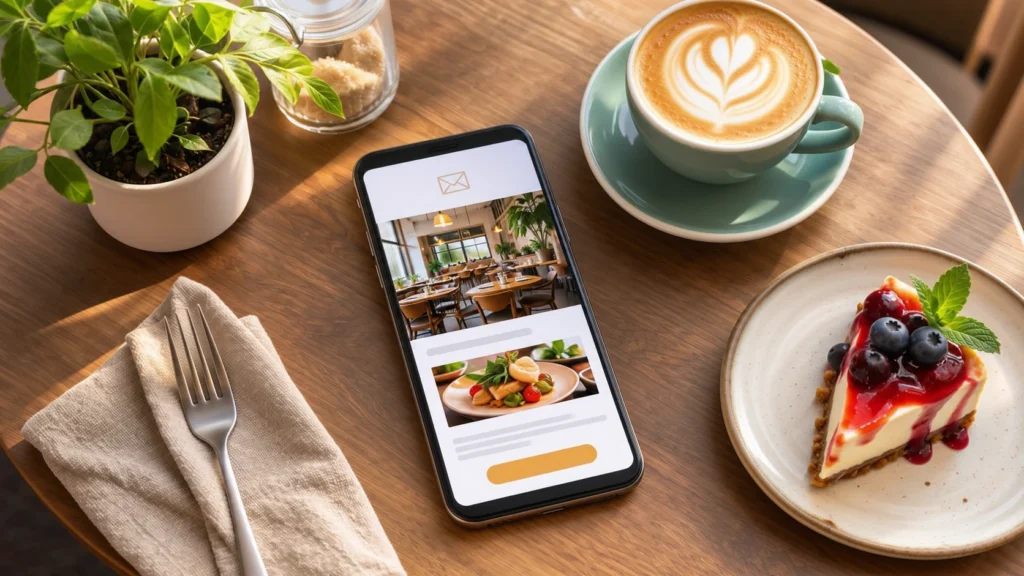
Email marketing for restaurants means sending permission-based messages that bring guests back for another meal. This guide explains why email still works, how to build a consent-based email list, which six emails to send first, how to plan newsletter content, when to send, how to choose tools, and how to measure real results.
Why Email Marketing for Restaurants Still Works?
Social platforms decide who sees your posts. An email list is different, because you own it. Industry roundups citing Litmus put average email ROI at $36 to $42 for every $1 spent. That is a cross-industry average, not a promise for any single restaurant.
Restaurant benchmarks vary by source. Reported open rates run from roughly 25% to 44%, for example 32.54% for dining and food services and 43.69% for restaurants. Treat opens as a rough guide only, because Apple’s Mail Privacy Protection has made open rates unreliable.
Return visits tell you more. One vendor’s 2026 benchmark found that blast emails brought back 0.27% of recipients, while welcome and win-back emails brought back 6.5% to 7.2%. That is a single source, but the direction is clear: triggered emails beat generic blasts.
What Is Restaurant Email Marketing?
Restaurant email marketing is sending emails to guests who opted in, to promote menus, offers, events and reservations and to encourage repeat visits. Email marketing for restaurants differs from social posting because you can segment guests by behavior, such as first-time visitors, regulars and lapsed customers.
Email Marketing for Restaurants: 6 Effective Strategies:
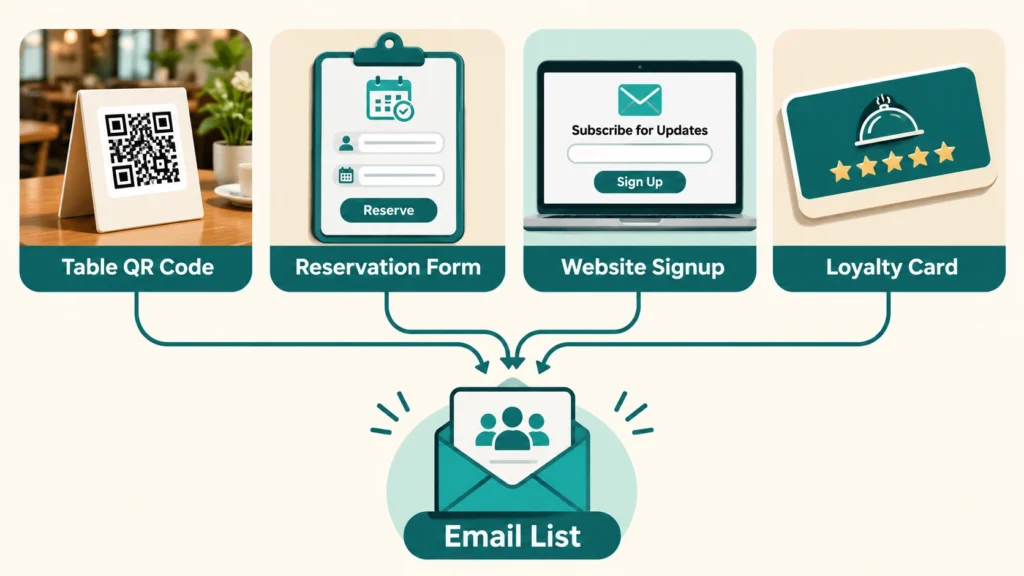
1. How to Build a Restaurant Email List?
- Table QR codes. Link to a short signup form and offer a small reward, such as a free dessert on the next visit.
- Reservation and ordering forms. Add an unticked consent checkbox.
- Your website. Put a signup box on the homepage and menu page, and say what subscribers will receive.
- Loyalty program or Wi-Fi login. Collect emails only with a clear opt-in.
Never buy lists. Consent rules differ by country (for example CAN-SPAM in the US, GDPR in the EU and the DPDP Act in India), so confirm local requirements and always include an unsubscribe link.
2. Which Emails Should a Restaurant Send?
Start with six emails. Each one has a trigger and a single goal.
| Trigger | Goal | |
|---|---|---|
| Welcome | Signup | Set expectations, drive a first visit |
| Birthday or anniversary | Date on file | Fill a celebration booking |
| Win-back | No visit in about 45–60 days (adjust to your visit pattern) | Bring a lapsed guest back |
| Seasonal menu | New dish or menu | Raise awareness and bookings |
| Event | Upcoming event | Sell tables or tickets |
| Feedback request | Day after a visit | Collect feedback and reviews |
3. Restaurant Newsletter Ideas: How to Write Emails That Bring Guests Back
- One new dish with a single appetizing photo and a “book a table” button
- A short story about a supplier, chef or recipe
- A limited-time offer with a code your staff can redeem
- Upcoming events, such as live music or a tasting night
- A guest review, used with permission
Give each email one goal and one main button. Keep subject lines short and specific.
4. When Should Restaurants Send Marketing Emails?
One benchmark compilation points to 3 PM to 7 PM as the best time to send restaurant campaigns, likely because guests are deciding where to eat. Use it as a starting point and test your own audience. As a practical rule, send two to four campaigns a month alongside your automated emails, then adjust based on unsubscribes and visits.
5. How to Choose Email Marketing Tools for Restaurants?
Look for these features:
- Segmentation and automation for welcome, birthday and win-back emails
- Mobile-friendly templates, since many guests read on phones
- Integration with your reservation, ordering or POS system
- Unsubscribe handling and domain authentication (SPF, DKIM, DMARC)
- Pricing that fits your list size
A single location can often start on a free plan. Switch when you need automation or deeper reporting.
6. How to Measure Results?
The best email marketing for restaurants is judged by visits and revenue, not opens. Track:
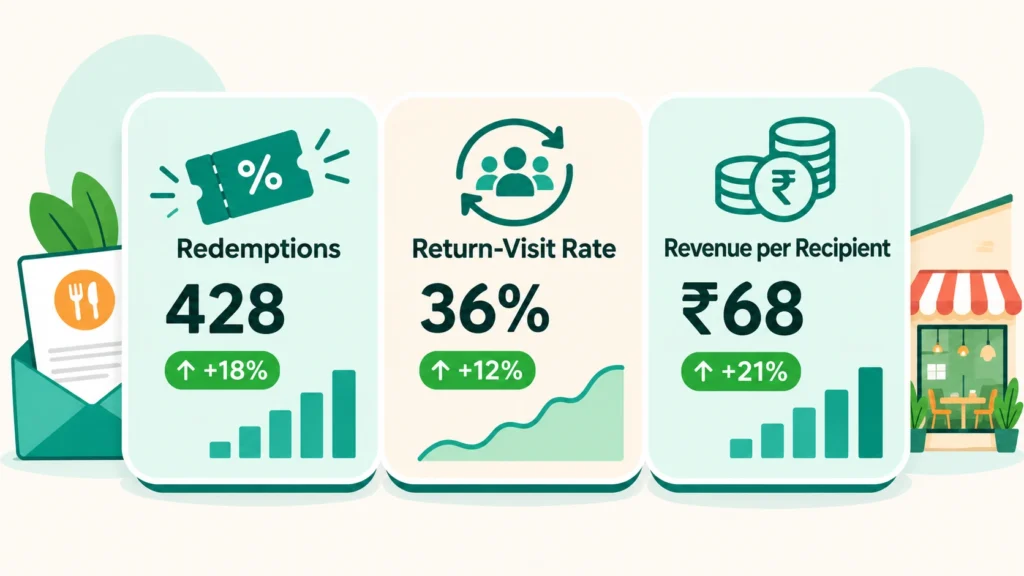
- Redemptions: use a unique code or “show this email” offer
- Return-visit rate among recipients
- Revenue per recipient
- Unsubscribe rate: above 0.5% suggests a targeting problem
Conclusion
Email marketing gives restaurant businesses a practical way to communicate directly with customers, promote special offers and encourage repeat visits. A successful strategy combines permission-based subscriber collection, audience segmentation, personalized promotions, automated campaigns and continuous performance measurement.
Whether you operate a small cafe or a large restaurant, start with a simple newsletter and gradually introduce automation and customer segmentation. Focus on sending useful messages rather than filling customers’ inboxes with unnecessary promotions.
With consistent optimization and relevant communication, email can become an important part of your restaurant’s long-term digital marketing strategy.