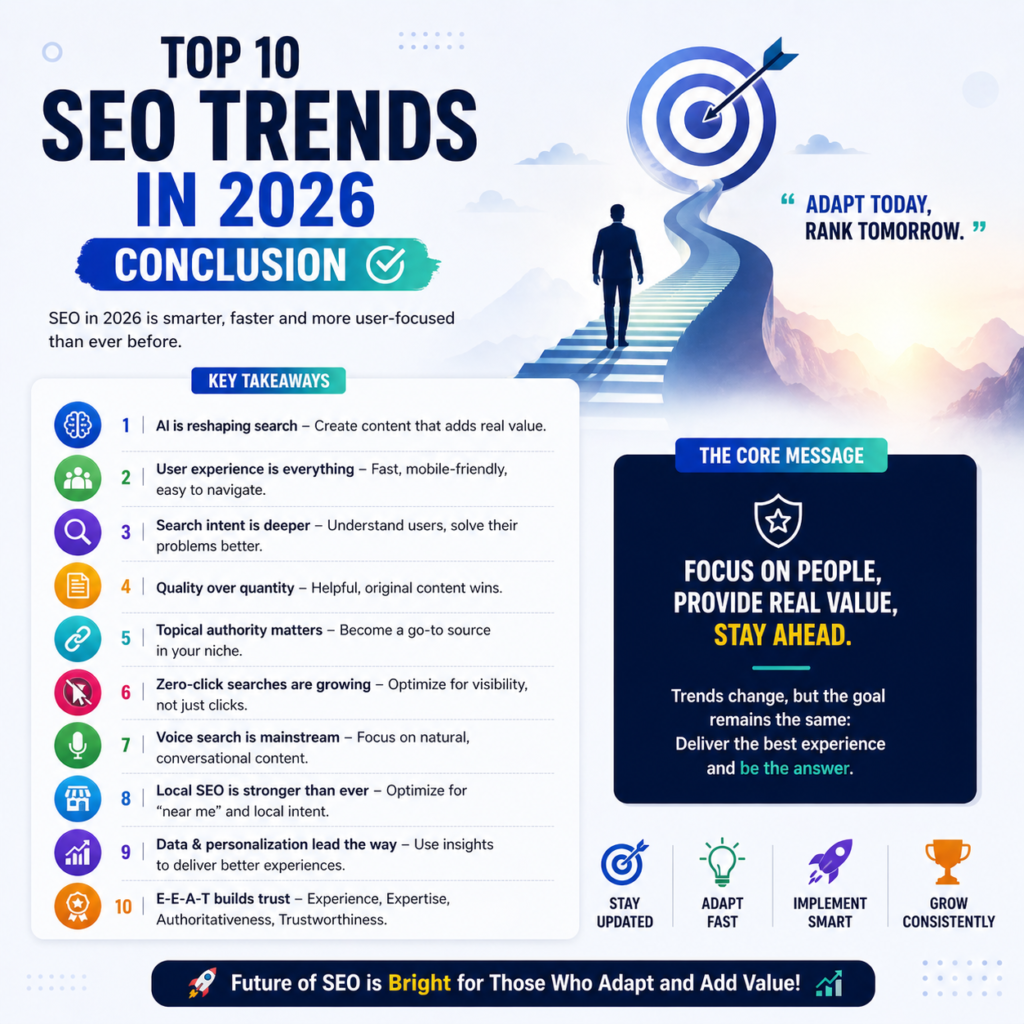
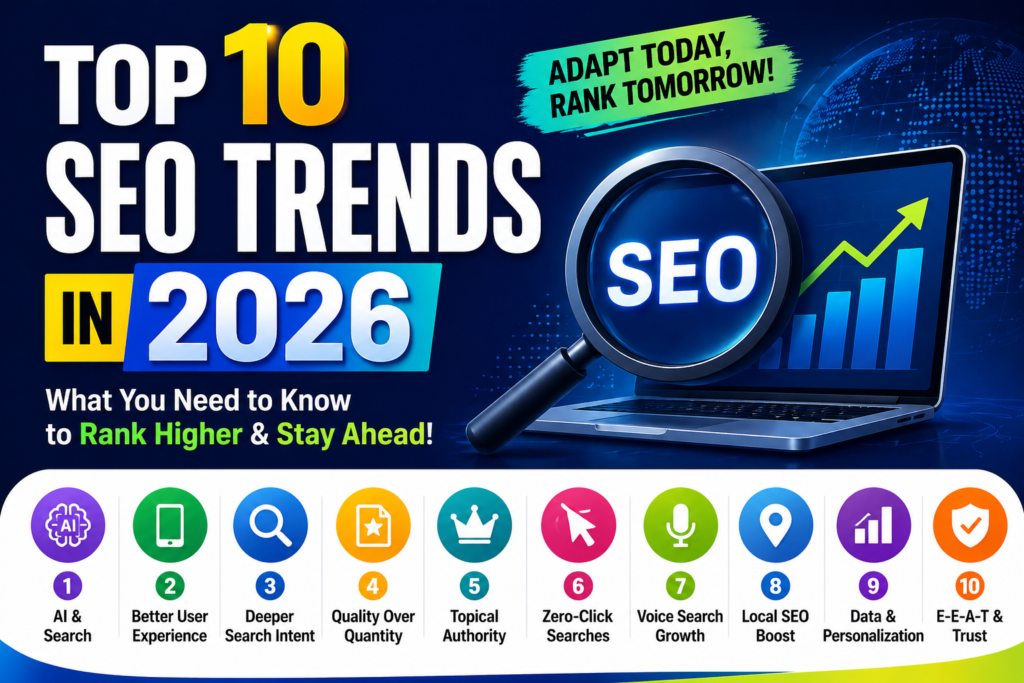
Top 10 SEO Trends in 2026
SEO in 2026 is changing fast, and the old way of writing content is no longer enough. Search is now powered by AI, answer engines, and generative results, which means websites must optimize for both people and machines. If you want your content to stay visible, you need a strategy that combines SEO, AEO, and GEO in a way that is helpful, trustworthy, and easy to use.
In this guide, you will learn the top 10 SEO trends in 2026, why they matter, and how to use them for better rankings, stronger visibility, and a better user experience. This article is designed for readers first, while still being fully optimized for search engines and AI-powered discovery systems.
What SEO looks like in 2026?
SEO is no longer only about adding keywords and building links. In 2026, search engines are better at understanding intent, context, entities, and content quality. That means your content must be genuinely useful, easy to navigate, and written with real expertise.
Today, a successful SEO strategy has three layers. SEO helps you rank in traditional search results, AEO helps you appear in direct answers, and GEO helps your content get noticed in generative AI results. If you combine all three, your content has a much better chance of reaching users across different search experiences.
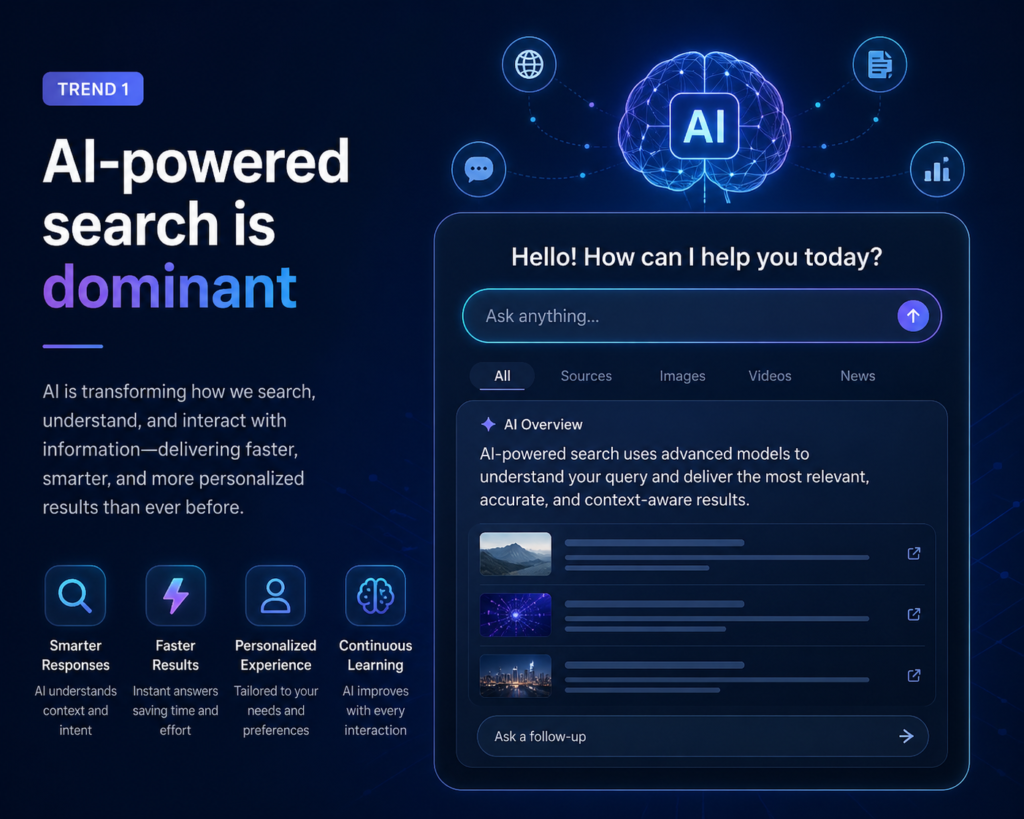
Trend 1: AI-powered search is dominant
The biggest shift in 2026 is the rise of AI-powered search. Search engines are using AI to understand what users really mean, not just what they type. This makes search more conversational, more contextual, and more personalized.
For content creators, this means your writing must answer the full question, not just match a keyword. Pages that explain a topic clearly, deeply, and naturally are more likely to perform well. Thin, repetitive, and keyword-stuffed pages are losing value fast.
Trend 2: AEO is becoming essential
AEO, or Answer Engine Optimization, is one of the most important changes in search. It focuses on making your content easy for answer systems, voice assistants, and featured snippets to use as a direct response.
To optimize for AEO, your content should include question-based headings, short direct answers, and clear explanations. FAQ sections, bullet lists, and structured formatting help search systems extract your content more easily. In 2026, if your page is not answer-friendly, you may lose visibility even if the content is good.
Trend 3: GEO is rising fast
GEO, or Generative Engine Optimization, is the practice of making content visible in AI-generated search results. These systems often summarize multiple sources, so your content needs to be clear, reliable, and semantically strong.
The best GEO content is original, well organized, and rich in topic depth. It should include enough context for AI systems to understand what your page is about and why it is trustworthy. If your website becomes a strong source of factual, useful information, it has a better chance of being referenced by generative search tools.
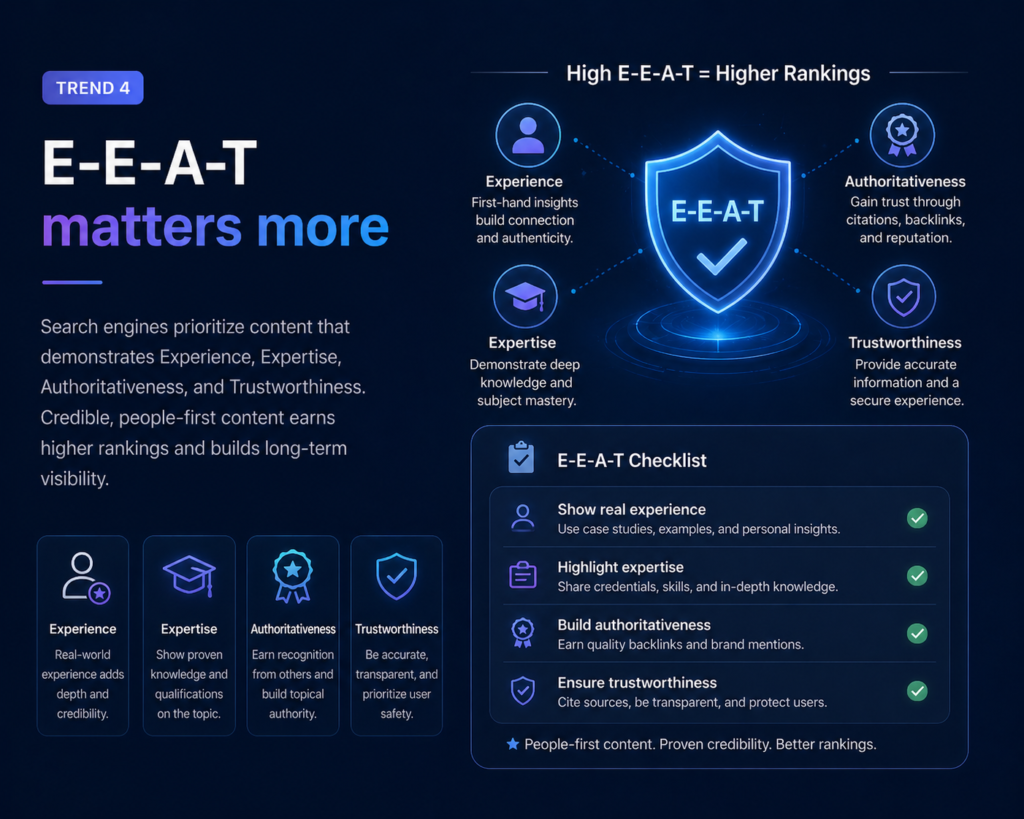
Trend 4: E-E-A-T matters more
Experience, Expertise, Authoritativeness, and Trustworthiness are more important than ever in 2026. Search systems want to recommend content that feels credible and helpful, especially for topics that affect money, health, business, or decisions.
You can improve E-E-A-T by showing author bios, citing reliable information, using real examples, and keeping content updated. A page written by someone with real experience often performs better than generic AI text. Trust is now a ranking advantage.
Trend 5: UX affects rankings strongly
User experience is now a major part of SEO success. If your site is hard to read, slow to load, or confusing to navigate, users will leave quickly. That sends a bad signal to search engines and reduces your chances of ranking well.
In 2026, good UX means mobile-friendly design, short paragraphs, clear headings, fast page speed, and simple navigation. Your content should be easy to scan and pleasant to read. A strong user experience helps both SEO and conversions.
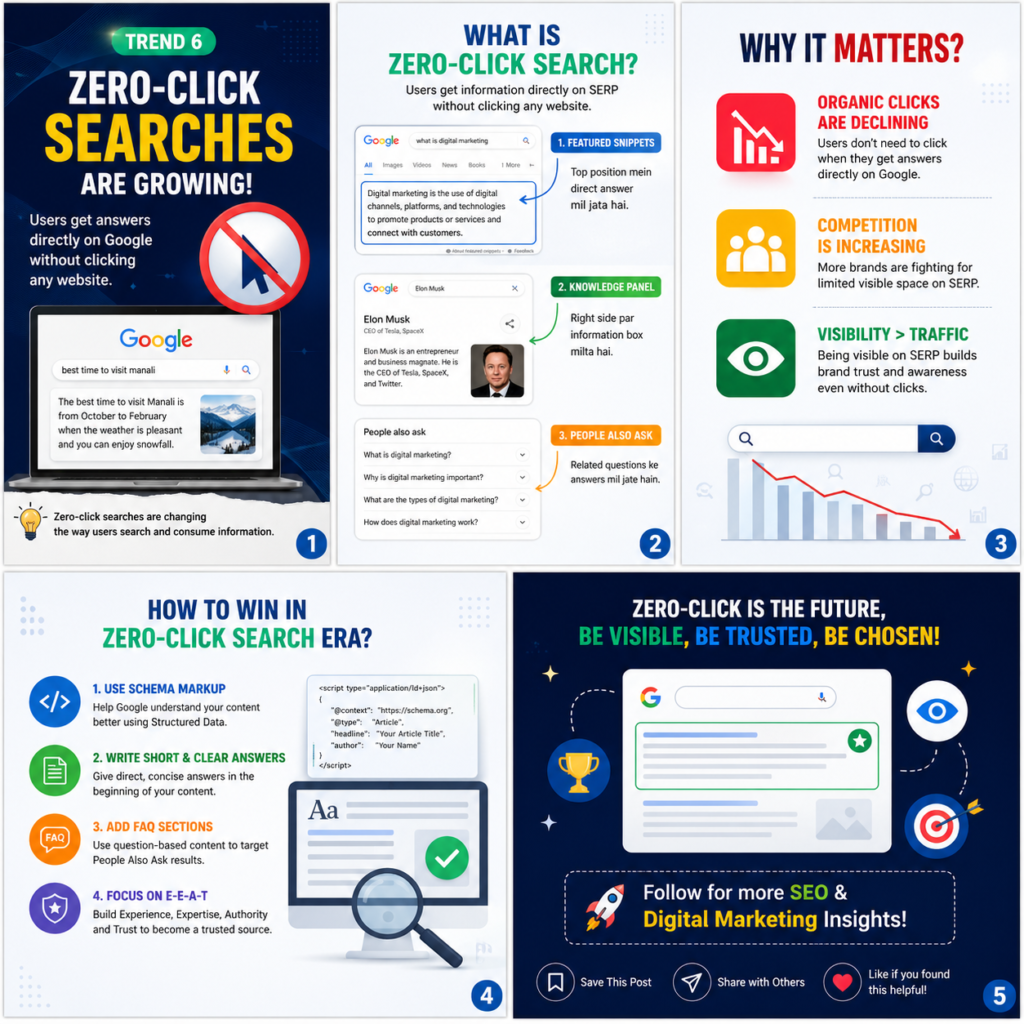
Trend 6: Zero-click searches are growing
More searches end without a click because users get answers directly on the results page. AI overviews, featured snippets, knowledge panels, and direct answers are changing how traffic works.
This does not mean SEO is dead. It means your goal is not only clicks, but also visibility, trust, and brand recognition. If people repeatedly see your content in answer formats, they are more likely to remember your brand and visit later.
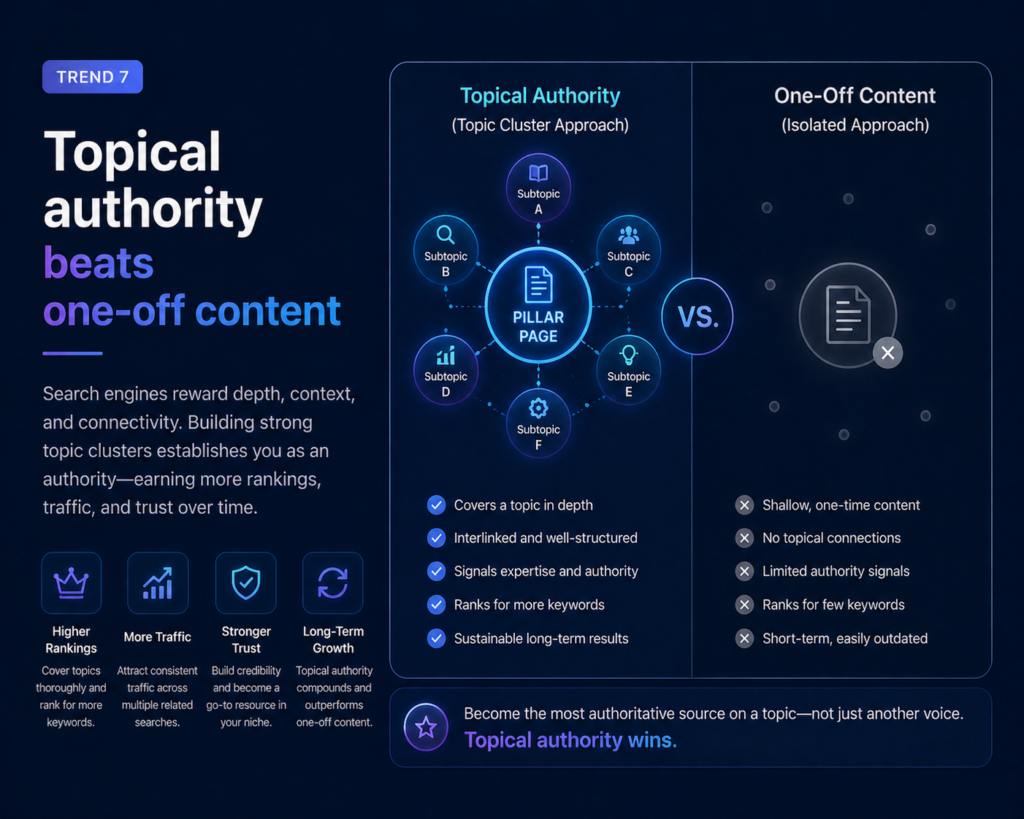
Trend 7: Topical authority beats one-off content
Search engines are rewarding websites that cover a subject in depth. Instead of publishing random blog posts, successful sites are building content clusters around a topic. This shows expertise and helps search engines understand the full scope of your website.
For example, if your topic is SEO, you should also create related articles on keyword research, technical SEO, AEO, GEO, content strategy, and link building. When your website covers a topic from multiple angles, it becomes stronger in search.
Trend 8: Human content outranks weak AI content
AI tools are useful, but generic AI content is no longer enough on its own. Search systems are getting better at identifying content that lacks originality, depth, or real value.
In 2026, human-reviewed content wins. That means you can use AI for research, outlines, and drafts, but the final article should include human editing, unique insights, and practical value. The best content is still content that feels real, specific, and helpful.
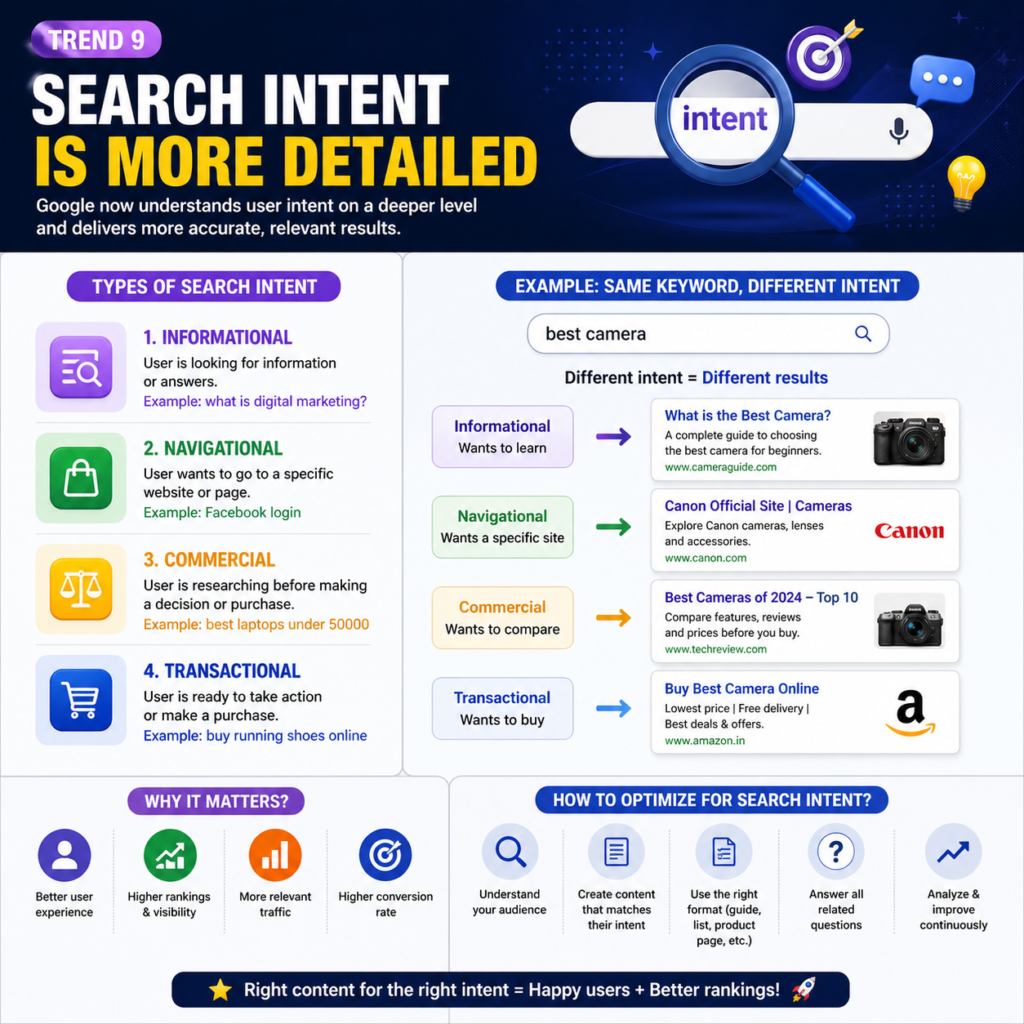
Trend 9: Search intent is more detailed
Search intent in 2026 is more specific than ever. Users no longer search with just broad keywords; they search with micro-intents, meaning they want exact solutions for exact situations.
This means your content should solve one clear problem at a time. Do not try to cover everything in a vague way. A focused article that fully satisfies a specific intent is more valuable than a broad page that tries to do too much.
Trend 10: Multichannel visibility matters
SEO is no longer limited to Google alone. People discover content through AI tools, YouTube, social search, voice search, and answer engines. That means your content strategy should work across multiple discovery channels.
In 2026, the smartest brands repurpose content into blog posts, short videos, reels, carousels, and FAQs. When your message appears across different platforms, your authority grows. Multi-format content improves reach, visibility, and user engagement.
How to optimize for SEO, AEO, and GEO
To succeed in 2026, your strategy should connect all three.
- For SEO, focus on technical health, strong keywords, internal links, and content quality.
- For AEO, answer questions directly, use structured headings, and add FAQs.
- For GEO, create deep, well-structured, trustworthy content that AI systems can understand and reference.
The best approach is to build one strong article that serves all three goals. That gives your content better reach across traditional search, direct answer systems, and generative AI results.
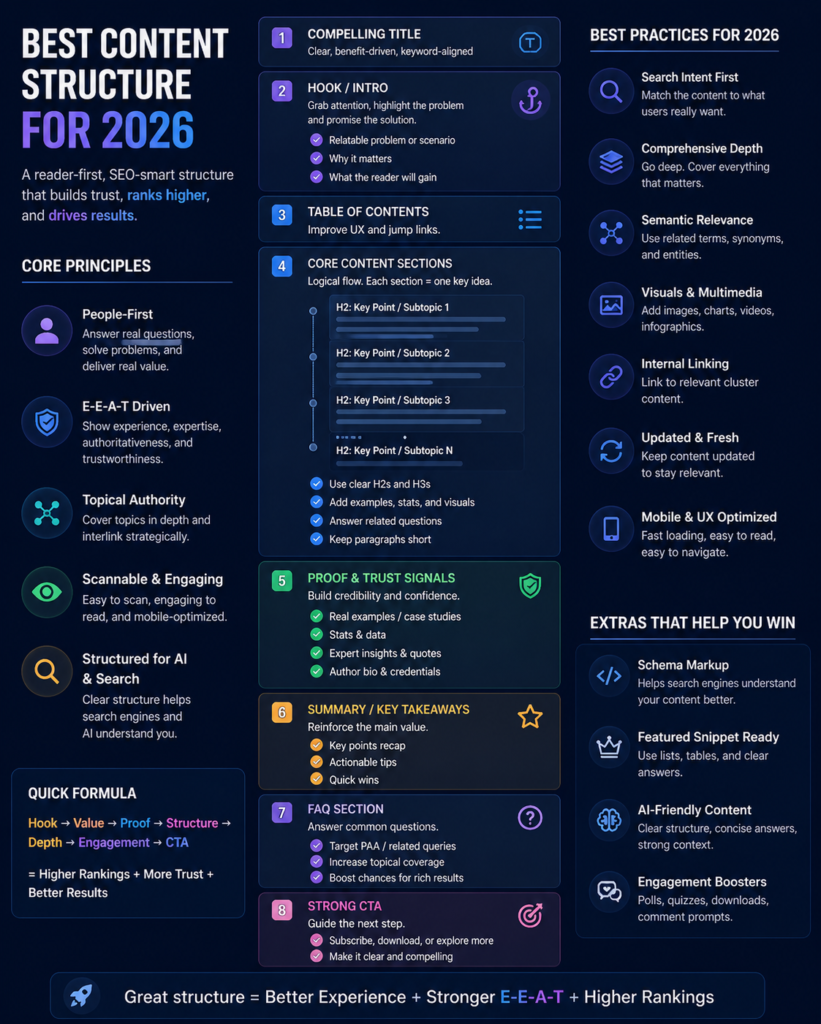
Best content structure for 2026
A strong article structure improves both UX and search visibility. Start with a clear introduction, then explain the topic in logical sections, and finish with a useful conclusion and FAQ.
Use short paragraphs, simple language, and descriptive headings. Add bullet points where helpful, and make sure each section answers one clear idea. This makes the content easier to read, easier to index, and easier to reuse in answer systems.
Practical SEO checklist for 2026
Before you publish, make sure your article includes these elements:
- One clear primary keyword.
- Related terms such as SEO, AEO, GEO, AI search, and generative search.
- A strong title and meta description.
- Readable formatting with H2 and H3 headings.
- Internal links to related pages.
- Clear answers in the opening section.
- A FAQ section.
- Fast loading and mobile-friendly layout.
This combination improves both rankings and user experience. It also makes your content more future-ready.
Common mistakes to avoid
Many websites still make the same old mistakes. They overuse keywords, publish thin content, ignore user experience, and write only for search engines. These tactics are less effective in 2026.
Another mistake is relying too much on AI without review. AI can help speed up creation, but it should not replace originality, accuracy, and human judgment. Content that feels generic is less likely to build trust or perform well.
Conclusion
The top 10 SEO trends in 2026 all point in the same direction: search is becoming more intelligent, more conversational, and more user-focused. To stay competitive, you need to think beyond traditional SEO and embrace AEO, GEO, better UX, stronger trust, and deeper topic coverage.
If you build content that genuinely helps users, answers questions clearly, and shows expertise, you will be in a much stronger position. The future of SEO is not just about ranking higher. It is about becoming a trusted source across search engines, answer engines, and AI-powered discovery platforms.