
The Ultimate Guide to ChatGPT Ads: Everything Marketers Need to Know (2026 Update)
The era of “Search” is evolving into the era of “Answers,” and OpenAI just opened the gates for advertisers. If you’ve been relying solely on Google or Meta, it’s time to pivot. ChatGPT has officially begun testing ads, and for growth-focused businesses, this is the “early bird” opportunity of the decade.
In this guide, we’ll break down exactly how ChatGPT ads work, who they reach, and how you can prepare your strategy.
1. What are ChatGPT Ads?
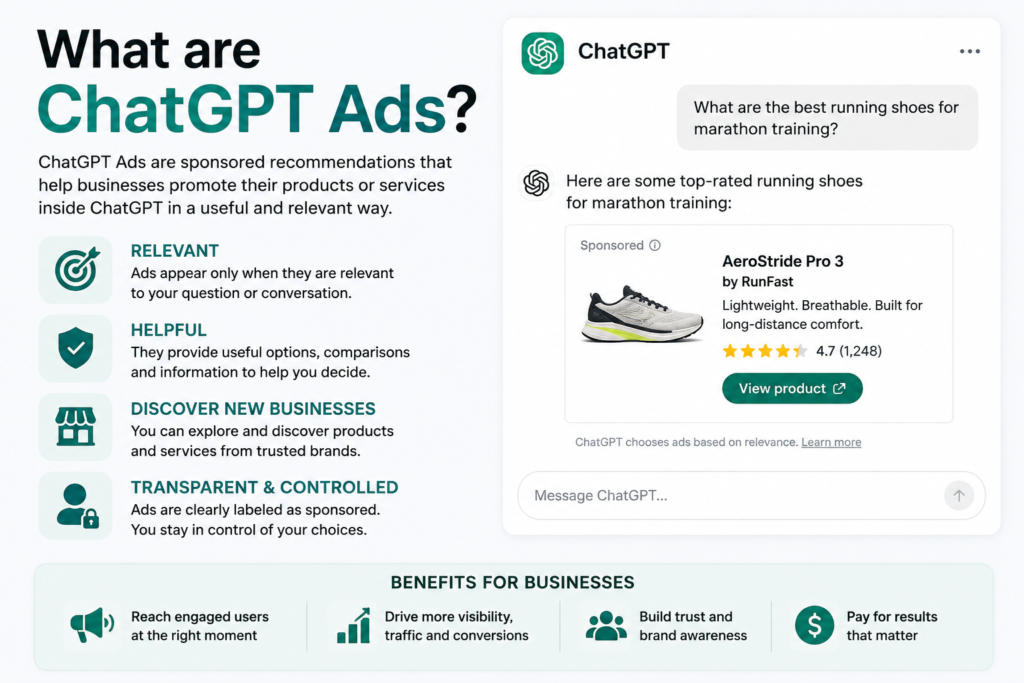
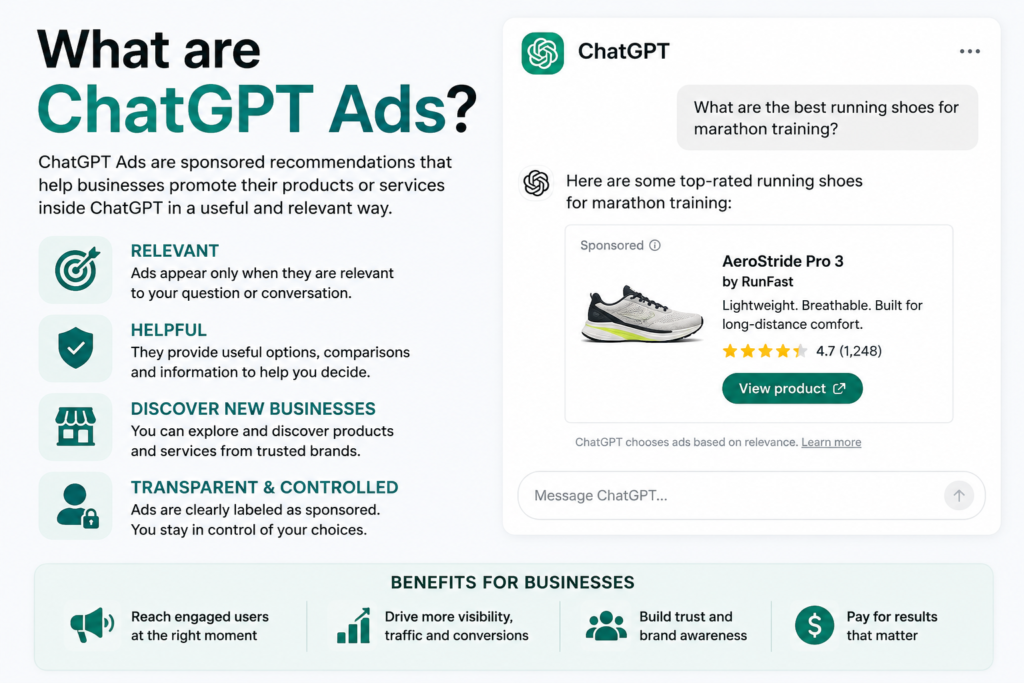
Unlike traditional search engine ads that appear at the top of a results page, ChatGPT ads are contextual placements that appear after a user’s interaction with the AI.
Key features include:
- Placement: Ads typically appear at the end of a response.
- Labeling: They are clearly marked as “Sponsored” to maintain user trust.
- Independence: OpenAI has explicitly stated that ads do not influence the AI’s answers. The response remains objective; the ad is a suggested next step.
2. Who Sees the Ads? (The Targeting Logic)
Currently, ads are in a testing phase (started February 2026) with the following parameters:
- Eligible Users: Primarily users on the Free and Go plans in the US.
- Ad-Free Tiers: Plus, Pro, Business, Enterprise, and Education accounts remain ad-free.
- Age Restrictions: Ads are not shown to users identified as under 18.
3. How Targeting Works (Context vs. Cookies)
ChatGPT ads move away from traditional tracking and toward Intent-Based Targeting.
- Current Conversation: The primary signal is what you are discussing right now.
- Personalized Ads (Optional): If a user has personalization enabled, OpenAI may use past chats and “Memory” to surface more relevant ads.
- Privacy First: Advertisers cannot see your chat history or personal details. They only receive aggregated performance data (clicks and views).
4. Step-by-Step: How to Prepare Your Strategy
While the ad manager is still rolling out to select partners, here is how you can win early:
- Step 1: Focus on High-Intent Keywords. Since ads are triggered by conversations, think about the “problems” your product solves. If someone asks “How do I scale my SaaS?”, your ad for a CRM should be there.
- Step 2: Optimize for Conversational CTA. Your ad copy shouldn’t just say “Buy Now.” It should feel like a continuation of the help they just received. (e.g., “Need a tool to implement this strategy? Try [Brand] free.”)
- Step 3: Visuals Matter. Previews show that images are displayed alongside ad copy. Invest in high-quality, clean product photography or data-driven infographics.
- Step 4: Landing Page Alignment. Because the user is coming from a deep AI conversation, your landing page should be informative and solve the specific problem they discussed.
5. Why This is a Game Changer for Growth
- Lower Competition: While everyone fights for expensive Google keywords, the “Answer Engine” space is relatively fresh.
- High Trust: Users trust ChatGPT’s advice. Being the “suggested solution” at the end of a helpful tip provides massive social proof.
- End-of-Funnel Placement: Users often use ChatGPT right before making a decision. You are capturing them at the peak of their intent.
The Growth Marketer’s Verdict
Don’t wait for ChatGPT ads to become saturated. Start mapping out your “Conversational Keywords” now. If you can position your brand as the logical next step to a user’s query, you’ll see conversion rates that traditional search ads can’t touch.
Ready to scale your AI marketing strategy? Subscribe to our newsletter for the latest OpenAI Ad Manager updates!