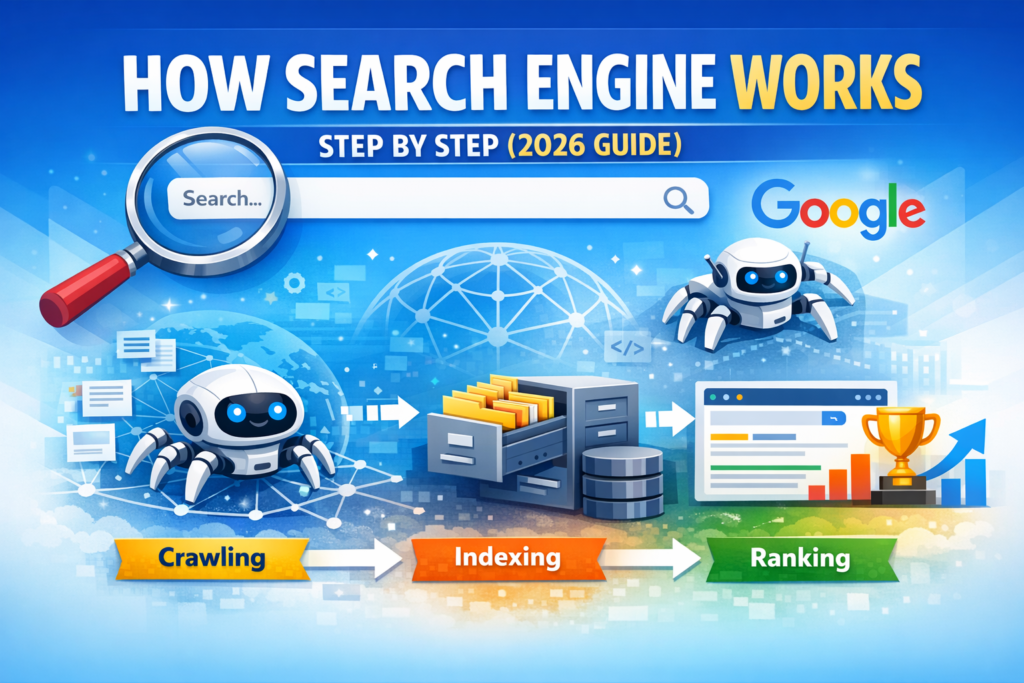
Search engines like Google help users find information online within seconds. But how do they actually work? In this guide, you’ll learn how search engines work step by step, including crawling, indexing, and ranking—explained in a simple and beginner-friendly way.
Table of Contents
How Search Engine Works Step by Step (2026 Guide)
Search engines are the backbone of the internet. Every time you search something on Google, you get thousands of results instantly—but have you ever wondered how this process works?
Understanding how search engines work is essential if you want to improve your website’s SEO and rank higher on Google.
In this guide, we will break everything down into simple steps:
- Crawling
- Indexing
- Ranking
What is a Search Engine?
A search engine is a software system designed to search for information on the internet and deliver the most relevant results based on user queries.
Popular search engines include:
- Bing
- Yahoo
Among them, Google dominates with over 90% market share.
How Search Engine Works Step by Step
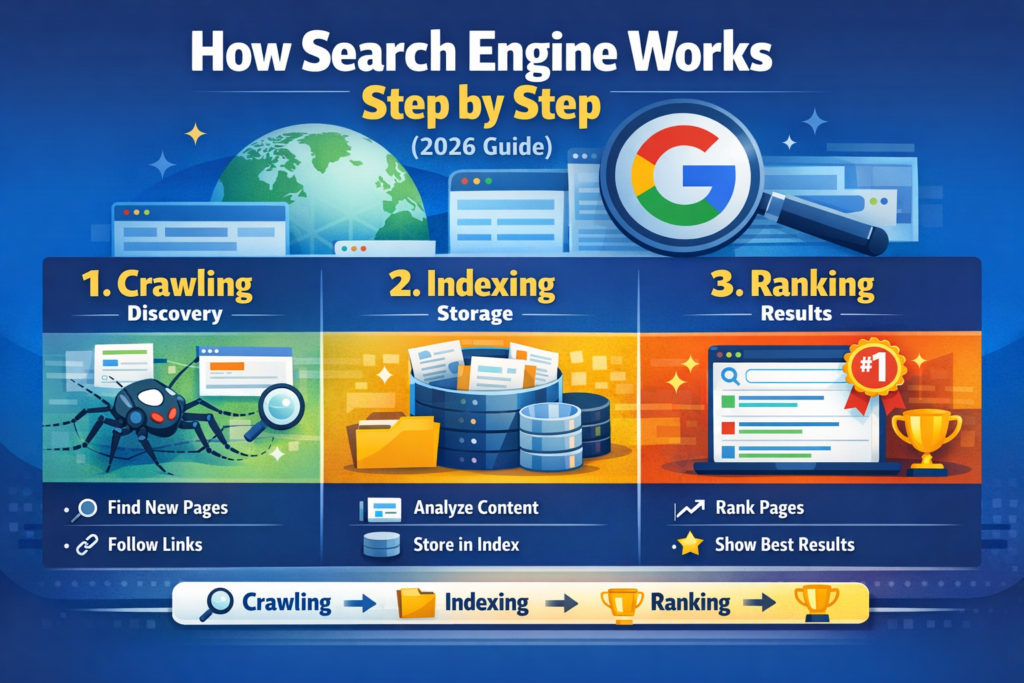
Search engines follow three main steps to deliver results:
1. Crawling (Discovery Phase)
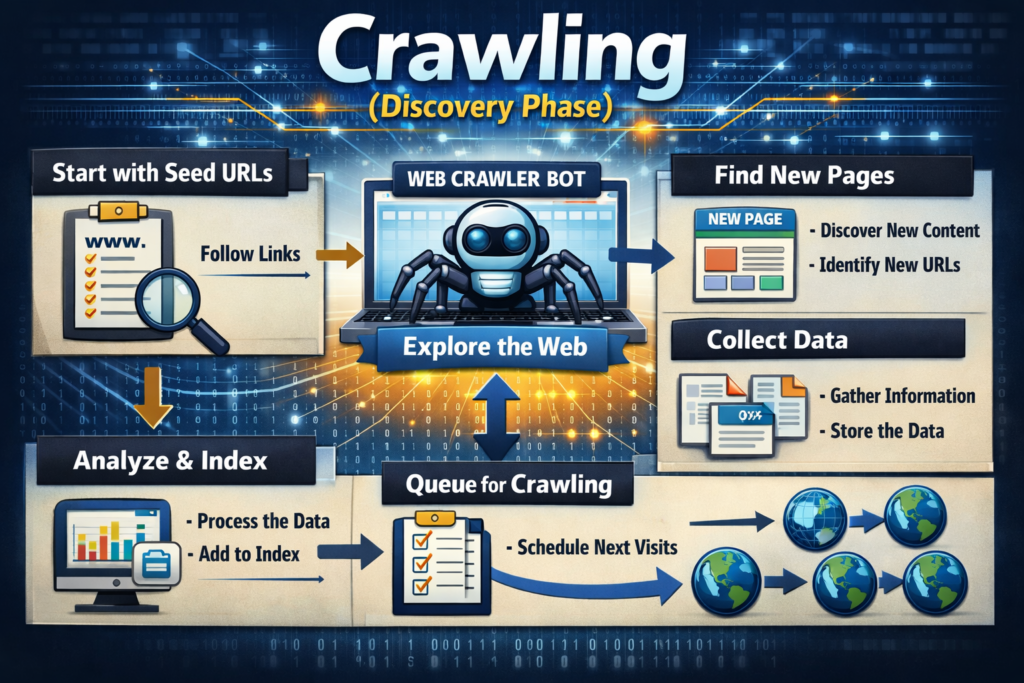
Crawling is the first step where search engines send bots (also known as spiders or crawlers) to discover new and updated web pages.
These bots:
- Scan websites
- Follow links
- Collect data from pages
Example:
When you publish a new blog post, Google’s crawler visits your page to analyze it.
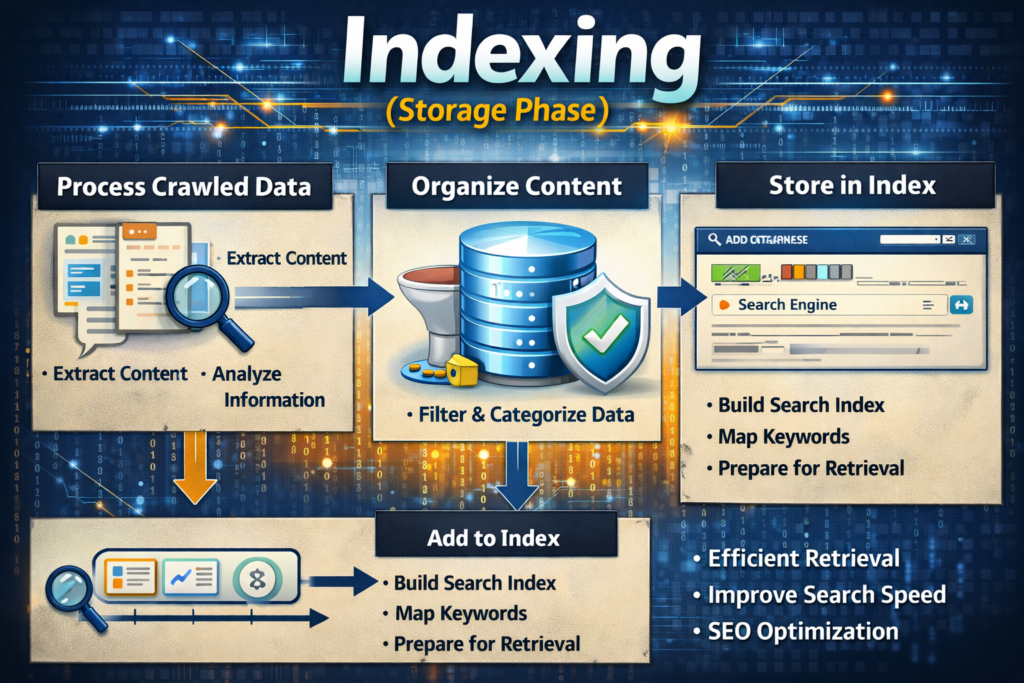
2. Indexing (Storage Phase)
After crawling, the collected data is processed and stored in a massive database called the index.
During indexing:
- Content is analyzed
- Keywords are identified
- Media (images, videos) are understood
Think of it as Google’s digital library.
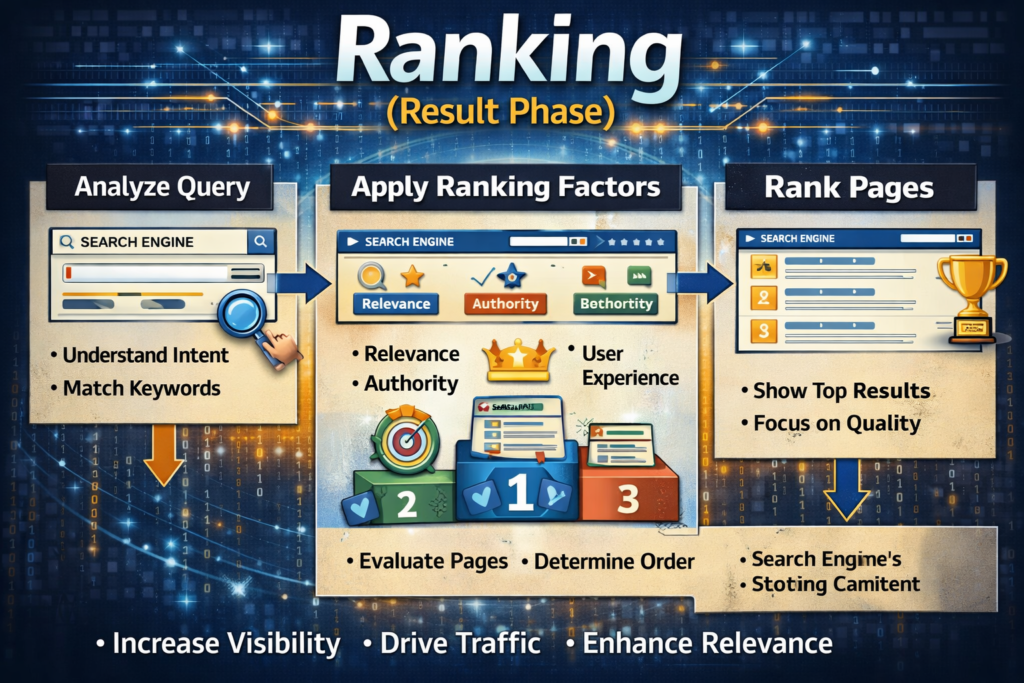
3. Ranking (Result Phase)
When a user searches for something, Google uses its algorithm to rank the most relevant pages.
It considers:
- Content quality
- Relevance
- Authority
- User experience
The best-optimized pages appear on top of search results.
What is Google Algorithm?
The Google algorithm is a complex system used by Google to rank web pages in search results.
It evaluates 200+ ranking factors to decide which page deserves the top position.
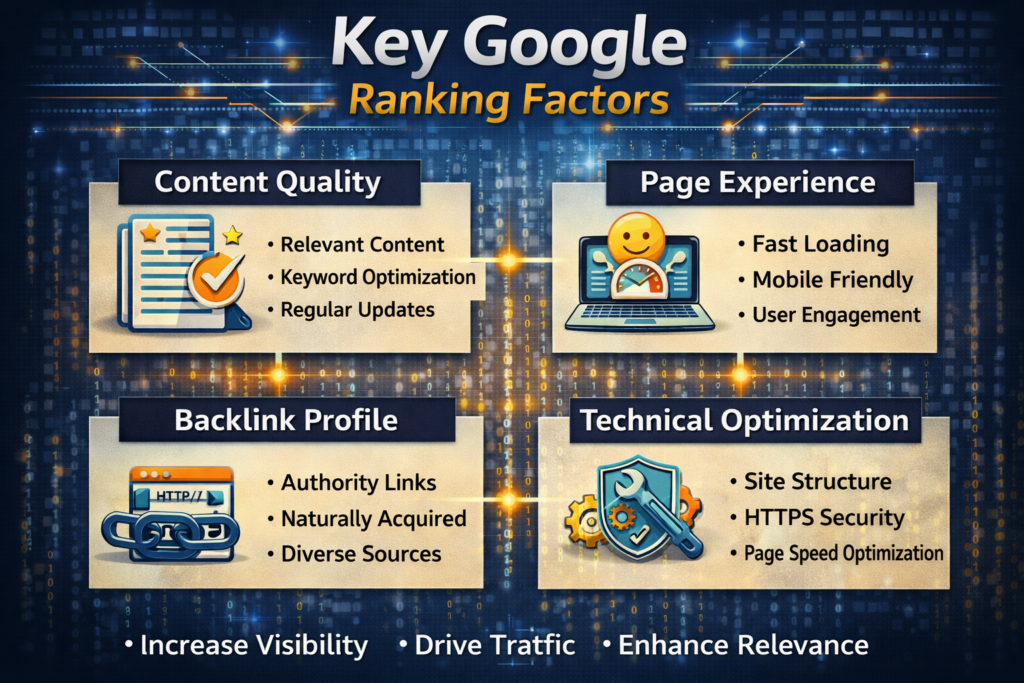
Key Google Ranking Factors
High-quality, helpful, and user-focused content ranks better.
Using the right keywords naturally improves visibility.
Links from trusted websites increase authority.
Faster websites provide better user experience.
Mobile-optimized websites rank higher.
Real-Life Example
Let’s say you search:
“best SEO tools”
Here’s what happens:
- Google checks its index
- Finds relevant pages
- Ranks them based on quality and relevance
Within seconds, you see the best results.
Why Understanding Search Engines is Important
Understanding how search engines work helps you:
Common SEO Mistakes to Avoid
Keyword stuffing
Low-quality content
Ignoring backlinks
Slow-loading website
Conclusion
Search engines work in three simple steps:
Understanding how search engines work step by step is the foundation of a successful SEO strategy. Search engines like Google use a structured process—crawling, indexing, and ranking—to discover, store, and display the most relevant content to users.
If you truly understand this process, you can align your website with how search engines think. Instead of guessing what works, you’ll be able to create content that is optimized, user-focused, and built for long-term growth.
Crawling ensures your content is discovered.
Indexing helps search engines understand and store your content.
Ranking determines where your page appears in search results.
But in 2026 and beyond, SEO is not just about keywords. Search engines are becoming smarter and more focused on:
- User intent
- Content quality
- Experience (UX)
- Trust and authority
This means simply adding keywords is not enough. You need to:
Create valuable and helpful content
Optimize your website for speed and mobile devices
Build high-quality backlinks
Focus on user experience and engagement
From a GEO (Geographical SEO) perspective, targeting location-based keywords and optimizing for local search can further improve your visibility—especially if your audience is from specific regions like India or Bangladesh.
From an AEO (Answer Engine Optimization) perspective, structuring your content with clear headings, FAQs, and direct answers increases your chances of appearing in featured snippets and voice search results.