Generative Engine Optimization (GEO) Guide
This page is a complete guide to Generative Engine Optimization (GEO) that explains howAI-powered search engines generate answers using information from multiple webpages. It covers the fundamentals of GEO, including how AI search works, the differences between GEO, traditional SEO, and AEO, and how search has evolved from link-based results to AI-generated responses.
The guide also explains GEO keyword research, conversational and question-based queries, content structure for AI search, and strategies for optimizing content for AI-generated answers. In addition, it includes topics such as entity SEO, semantic search, E-E-A-T signals, topical authority, and AI content optimization.
Overall, this page provides a structured overview of how to create clear, authoritative, and context-rich content that can be discovered and used by AI search engines like ChatGPT, Google AI Overview, Gemini, and Perplexity.
Table of Contents
Introduction to Generative Engine Optimization
What is Generative Engine Optimization (GEO)
Generative Engine Optimization (GEO) focuses on optimizing content so that AI-powered search engines can understand and use it when generating answers. It involves creating clear, structured, and informative content that helps AI systems identify reliable information and present it to users in AI-generated responses.
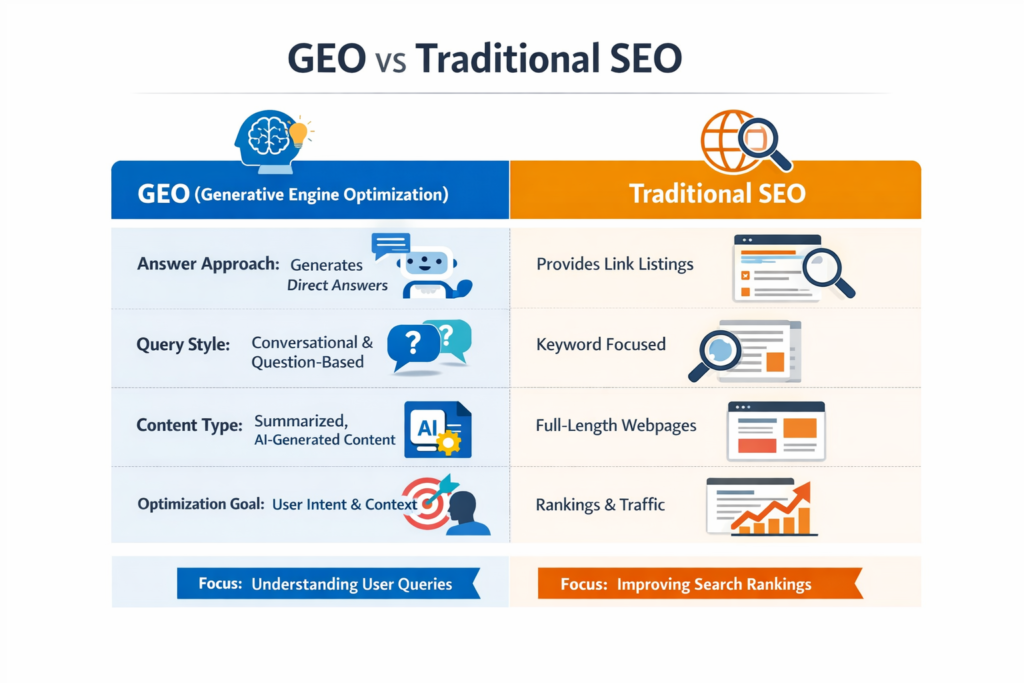
Difference Between GEO vs Traditional SEO?
The main difference between GEO and traditional SEO is how search results are delivered to users. Traditional SEO focuses on ranking webpages in search engine results, while GEO focuses on making content suitable for AI-generated answers.
| Feature | Traditional SEO | GEO |
|---|---|---|
| Goal | Rank webpages in search results | Appear in AI-generated answers |
| Search Results | List of website links | AI-generated responses |
| Content Focus | Keywords and rankings | Context, clarity, and information |
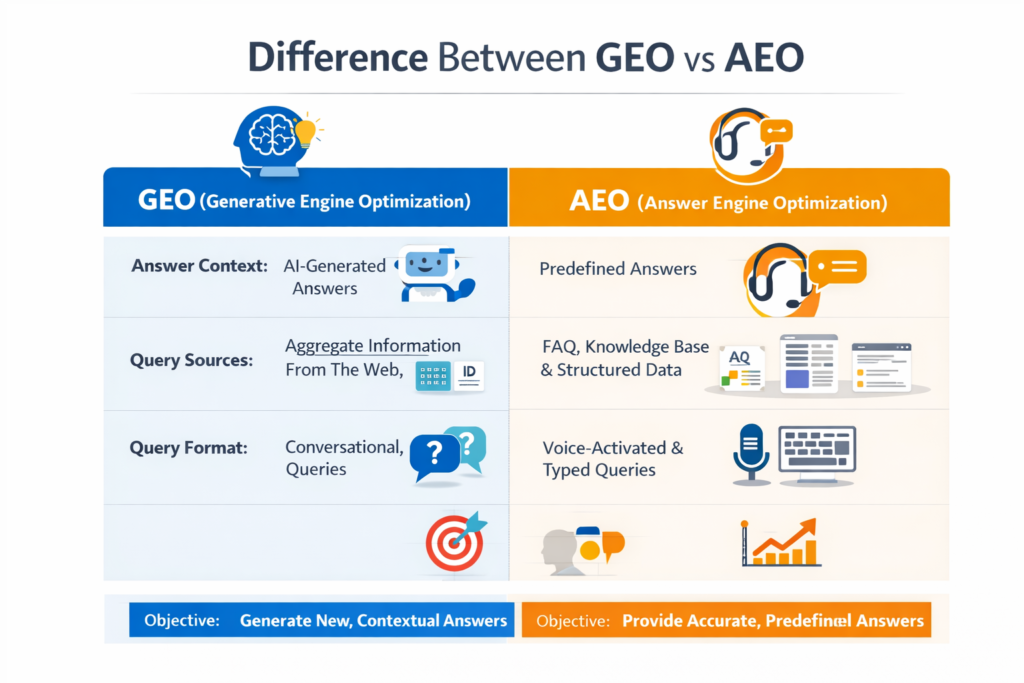
Difference Between GEO vs AEO?
Both GEO and Answer Engine Optimization (AEO) focus on providing answers, but their purpose is slightly different.
| Feature | AEO | GEO |
|---|---|---|
| Focus | Direct answers for questions | AI-generated responses |
| Results | Featured snippets, voice search | AI search summaries |
| Content Style | Short direct answers | Context-rich explanations |
How AI search engines work?
AI search engines use advanced algorithms and machine learning models to analyze large amounts of online content. When a user asks a question, the system scans different sources, understands the context, and generates a summarized answer based on reliable information.
Content that is well-structured, clear, and informative has a higher chance of being used by AI systems in their responses.
Evolution of search (Search → AI Search)?
Search technology has evolved significantly over time. Earlier, search engines only displayed links to websites. Today, many platforms provide instant answers generated by AI.
| Search Stage | Description |
|---|---|
| Traditional Search | Users see a list of website links |
| Voice Search | Users ask questions using voice assistants |
| AI Search | AI generates direct answers using multiple sources |
AI Search Engines Understanding
To understand Generative Engine Optimization (GEO), it is important to know how modern AI-powered search engines work. Unlike traditional search engines that mainly display website links, AI search platforms analyze information from different sources and generate direct answers for users.
These systems rely on structured, reliable, and well-organized content to produce accurate responses.
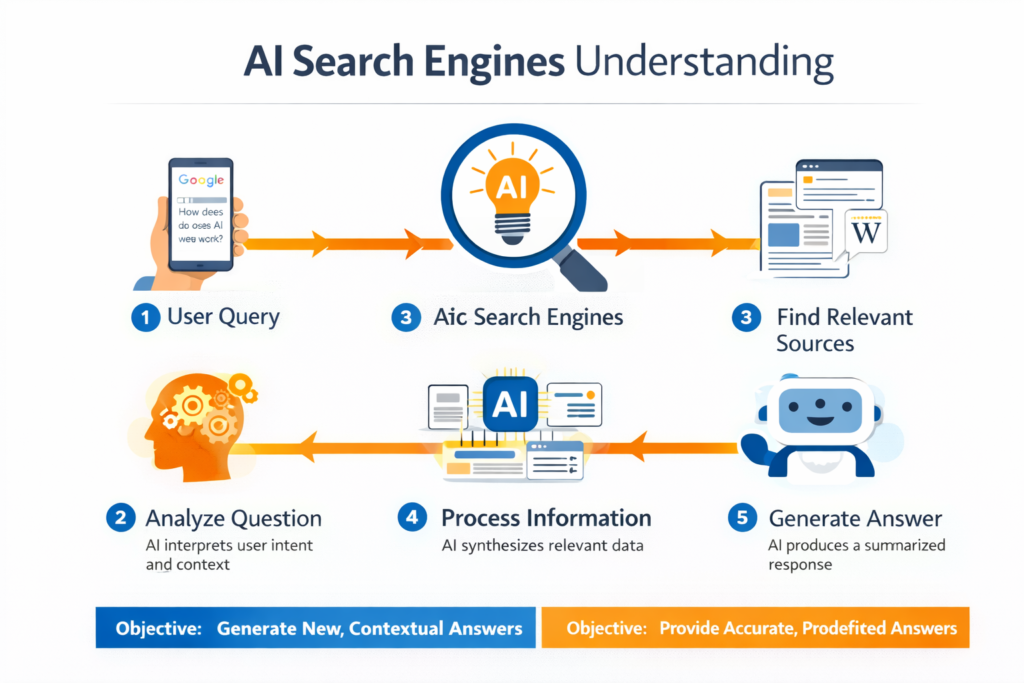
ChatGPT search provides answers by combining AI language models with web-based information. Instead of showing only links, it generates summarized responses based on multiple sources. Content that is clear, informative, and well-structured has a higher chance of being referenced in AI-generated answers.
How it works:
- Analyzes multiple online sources to understand the user’s question.
- Generates a summarized answer using relevant and reliable information.
Google AI Overview is an AI-powered feature in Google Search that generates quick summaries for user queries. It gathers information from different webpages and presents it as a concise answer at the top of the search results. Optimized content with clear explanations and strong context is more likely to be used in these summaries.
How it works:
- Scans multiple webpages to collect useful information.
- Generates a short AI summary at the top of the search results.
Perplexity AI works as an AI-powered answer engine that provides direct responses along with source citations. It analyzes reliable content from different websites and generates informative answers, often linking back to the sources used in the response.
How it works:
- Analyzes reliable websites and extracts relevant information.
- Shows AI-generated answers along with links to the sources.
Gemini AI is Google’s advanced AI system designed to understand complex queries and generate context-based answers. It processes large amounts of information and provides conversational responses that help users quickly find relevant information.
How it works:
- Uses advanced AI models to understand context and user intent.
- Generates conversational answers based on available information.
How Do AI Search Engines Generate Answers?
AI search engines generate answers by analyzing large amounts of online information and understanding the intent behind a user’s query. Instead of simply listing webpages, these systems process content from different sources and create a summarized response that directly answers the question.
How it works:
- AI models analyze user queries and understand the meaning behind the question.
- The system gathers relevant information from multiple webpages and generates a clear response.
What Is the AI Content Retrieval Process?
The AI content retrieval process refers to how AI systems find and collect relevant information from the web before generating an answer. Search engines scan many webpages and identify content that best matches the user’s query.
Key steps in this process:
- The system scans indexed webpages to find relevant content.
- It selects information that is clear, structured, and closely related to the query.
How Do AI Systems Select Sources for Answers?
AI search engines select sources based on relevance, clarity, and trustworthiness. Content that is well-structured and informative has a higher chance of being used as a reference in AI-generated answers.
Factors that influence source selection:
- Content quality and topical relevance.
- Authority and reliability of the source.
GEO Keyword Research
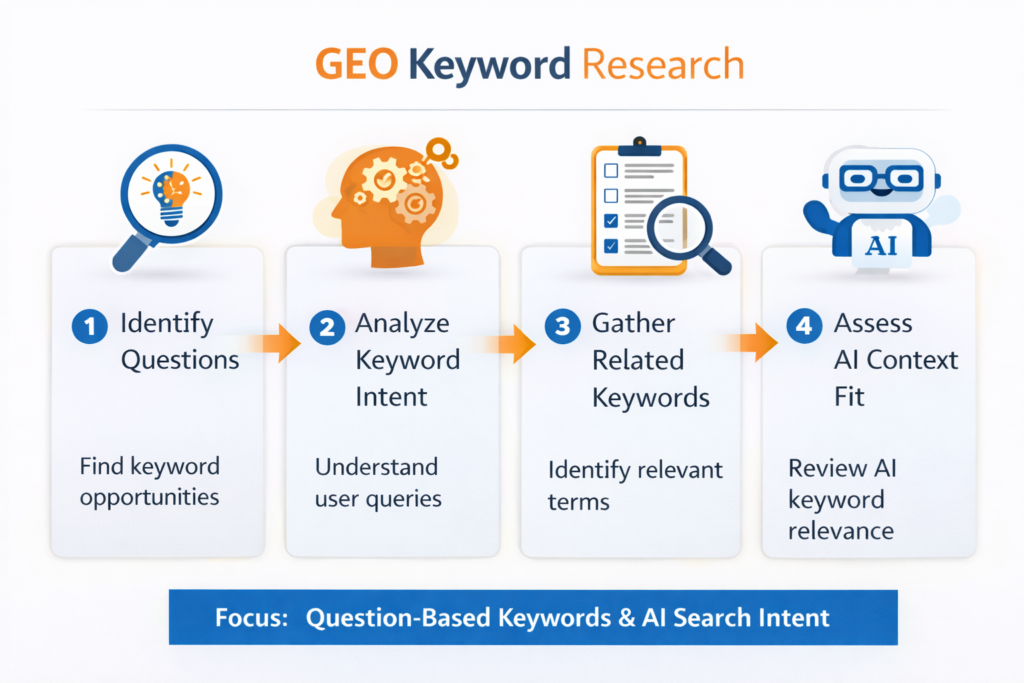
Keyword research for Generative Engine Optimization (GEO) is different from traditional SEO. In AI search environments, users often ask questions in a natural and conversational way. Because of this, GEO keyword research focuses on understanding user intent and identifying queries that AI search engines are likely to use when generating answers.
What Are Conversational Keywords?
Conversational keywords are search phrases that reflect how people naturally speak or ask questions. These keywords are commonly used in voice search and AI-driven queries.
Examples:
- What is Generative Engine Optimization?
- How does AI search work?
Why they matter:
- Match natural language queries.
- Improve visibility in AI-generated answers.
What Are Question-Based Keywords?
Question-based keywords are queries that start with words like what, how, why, when, or which. These keywords are important for GEO because AI search engines often select content that directly answers questions.
Benefits:
- Increase chances of appearing in AI answers.
- Help content match user search intent.
What Is Long-Tail Keyword Research in GEO?
Long-tail keywords are specific and detailed search phrases that usually contain three or more words. These keywords often have clearer intent and lower competition.
Example:
| Short Keyword | Long-Tail Keyword |
|---|---|
| GEO | What is Generative Engine Optimization in SEO |
| AI search | How AI search engines generate answers |
Long-tail keywords help content target specific user queries more effectively.
What Is AI Search Intent?
AI search intent refers to the real purpose behind a user’s query. AI systems analyze the context of a question to provide the most relevant answer.
Common types of intent:
- Informational – User wants to learn something
- Navigational – User wants to find a specific site
- Transactional – User wants to take an action
Understanding search intent helps create content that matches what users are actually looking for.
What Is Topic Clustering?
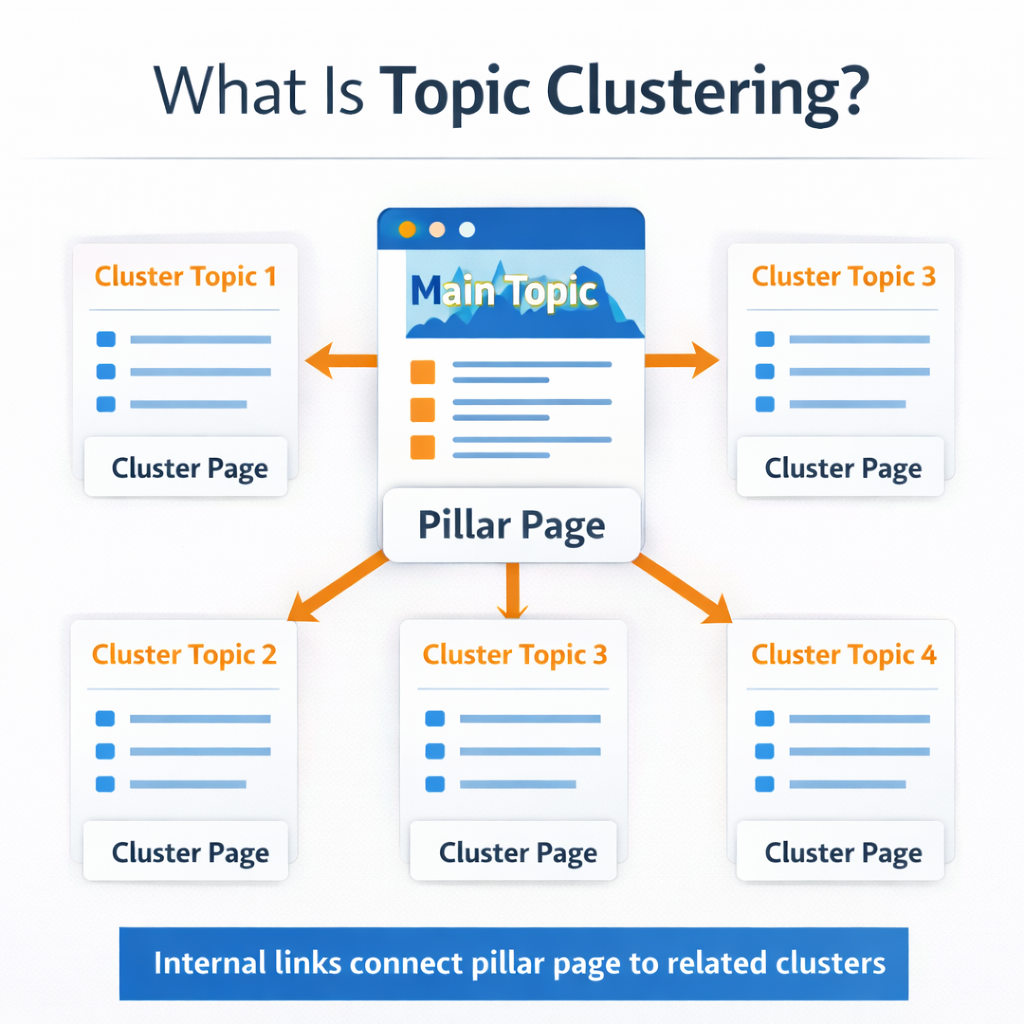
Topic clustering is a content strategy where a main topic page is supported by related articles. This helps search engines understand the depth of a topic and improves topical authority.
Example:
| Main Topic | Supporting Topics |
|---|---|
| Generative Engine Optimization | GEO keyword research |
| GEO strategies | |
| GEO vs SEO |
Topic clusters help AI systems better understand the relationship between different pieces of content.
Tools for GEO Keyword Research
These tools help identify questions, trends, and user queries related to GEO topics.
Google PAA (People Also Ask)
Shows real questions that users frequently search on Google.
AnswerThePublic
Generates question-based keyword ideas based on user searches.
AlsoAsked
Provides related questions and topic relationships.
Google Trends
Shows trending topics and search interest over time.
These tools help find keywords that are useful for AI search optimization and GEO-focused content.
Content Structure for GEO
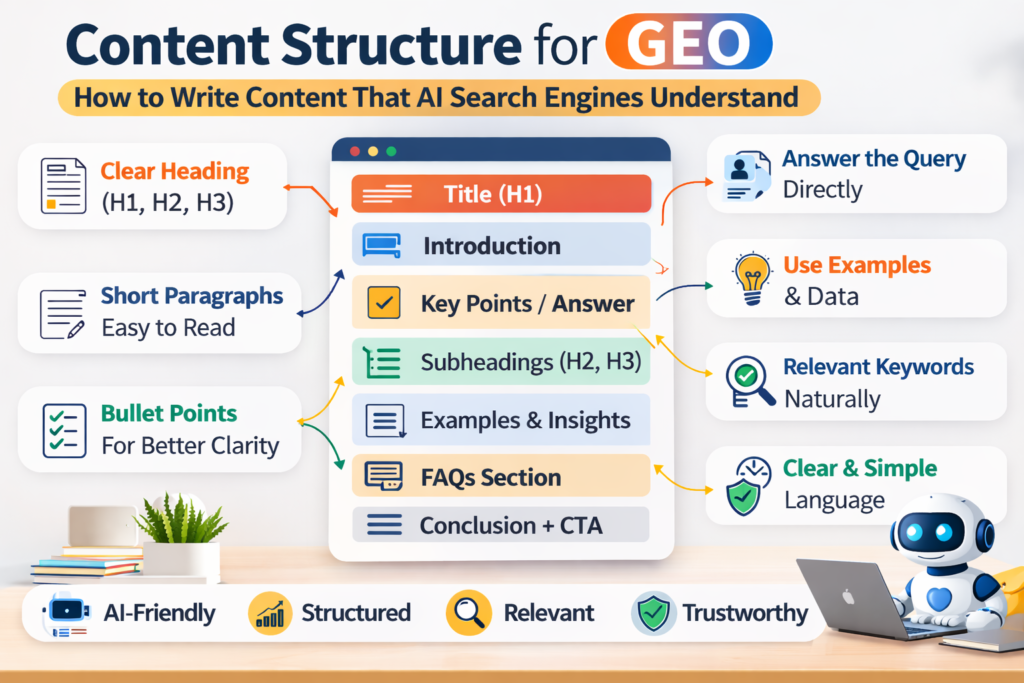
For Generative Engine Optimization (GEO), content structure plays a very important role. AI search engines prefer content that is clear, organized, and easy to understand. When information is structured properly, AI systems can quickly identify the main ideas and use them when generating answers for users.
What Is Question-Based Content?
Question-based content means structuring information around questions that users commonly ask. This approach helps AI search engines easily match content with user queries.
Why it matters:
- Matches natural search queries.
- Helps AI systems identify direct answers.
Why Are Clear Explanations Important?
AI systems prefer content that explains topics in a simple and direct way. Clear explanations make it easier for AI models to understand the context and generate accurate responses.
Best practices:
- Use simple language.
- Provide concise and helpful answers.
Why Are Structured Headings (H1, H2, H3) Important?
Headings help organize content into clear sections and subtopics. This structure helps search engines and AI systems understand the hierarchy of information on a page.
Benefits:
- Improves readability.
- Helps AI systems extract key information.
How Do Lists and Tables Help GEO?
Lists and tables organize information in a clear and scannable format. AI search engines often prefer structured data because it makes important points easier to identify.
Example:
| Format | Benefit |
|---|---|
| Bullet Lists | Highlight key points quickly |
| Tables | Compare information clearly |
Why Is Topic Depth Important for GEO?
Topic depth means covering a subject in a comprehensive and detailed way. AI search engines prefer content that explains a topic from multiple angles because it provides more context.
Advantages:
- Improves topical authority.
- Helps AI systems generate more accurate answers.
AI Search Content Optimization
To succeed in Generative Engine Optimization (GEO), content should be written in a way that AI search engines can easily understand and use. AI systems prefer information that is clear, reliable, and well-structured. When content is optimized properly, it becomes easier for AI platforms to select and present it in generated answers.
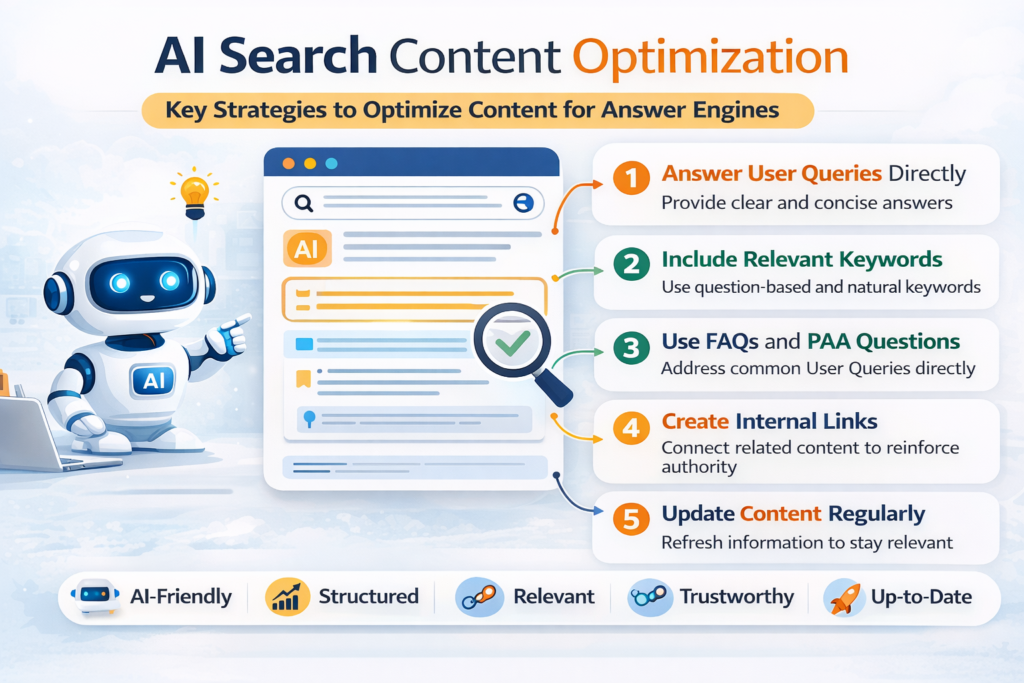
Clear and Concise Answers:
AI search engines prefer answers that are direct and easy to understand. Instead of long and complicated explanations, content should clearly address the user’s question.
Best practices:
- Answer the question in the first few sentences.
- Use simple and clear language.
Fact-Based Content:
AI systems prioritize accurate and factual information when generating responses. Content supported by reliable data and verified information has a higher chance of being selected.
Why it matters:
- Improves credibility.
- Helps AI systems trust the information.
Authoritative Sources:
Using trustworthy sources helps strengthen the reliability of content. AI search engines often prefer information that comes from credible and authoritative websites.
Examples:
- Research reports
- Industry publications
- Expert insights
Natural Language Writing
AI search platforms are designed to understand natural human language. Writing content in a conversational and easy-to-read style helps match how users ask questions.
Tips:
- Use simple sentence structures.
- Write as if explaining a topic to a real person.
Context-Rich Content
Context-rich content provides complete and meaningful explanations around a topic. This helps AI systems understand the broader context and generate more accurate answers.
Benefits:
- Improves topic clarity.
- Helps AI models connect related information.
Entity SEO for GEO
In Generative Engine Optimization (GEO), search engines and AI systems focus more on entities rather than just keywords. An entity can be a person, place, concept, brand, or topic that search engines can clearly understand. Entity-based optimization helps AI systems identify the meaning, context, and relationships between topics, which improves the chances of content being used in AI-generated answers.
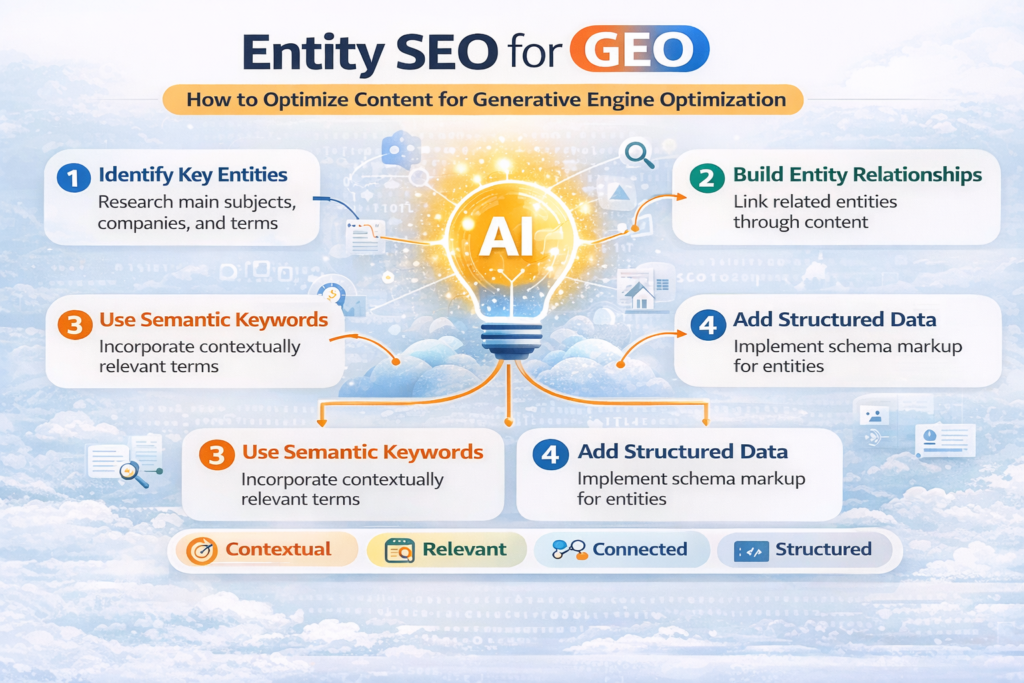
What Is Entity Optimization?
Entity optimization focuses on organizing content around clear topics and concepts instead of relying only on keywords. This helps search engines understand what the content is truly about.
Best practices:
- Use clear topic-focused headings.
- Provide accurate and structured information.
What Is a Knowledge Graph?
A knowledge graph is a system used by search engines to store and connect information about entities. It helps search engines understand how different topics, people, and concepts are related.
Benefits:
- Improves search understanding.
- Helps AI systems connect related information.
What Are Topic Relationships?
Topic relationships refer to how different topics are connected to each other within a subject. Creating content that covers related topics helps search engines understand the full context of a subject.
Example:
| Main Topic | Related Topics |
|---|---|
| Generative Engine Optimization | AI search engines |
| AI content optimization |
This structure improves topical authority and helps AI search engines understand the subject better.
What Is Semantic Search?
Semantic search focuses on understanding the meaning and context behind search queries rather than matching exact keywords. AI search engines use semantic analysis to find the most relevant answers.
Why it matters:
- Helps search engines understand user intent.
- Improves accuracy of AI-generated responses.
E-E-A-T for AI Search
In Generative Engine Optimization (GEO), trust and credibility are very important. AI search engines prefer content that comes from reliable and trustworthy sources. The E-E-A-T framework helps search engines evaluate whether the information is accurate, helpful, and created by knowledgeable sources.
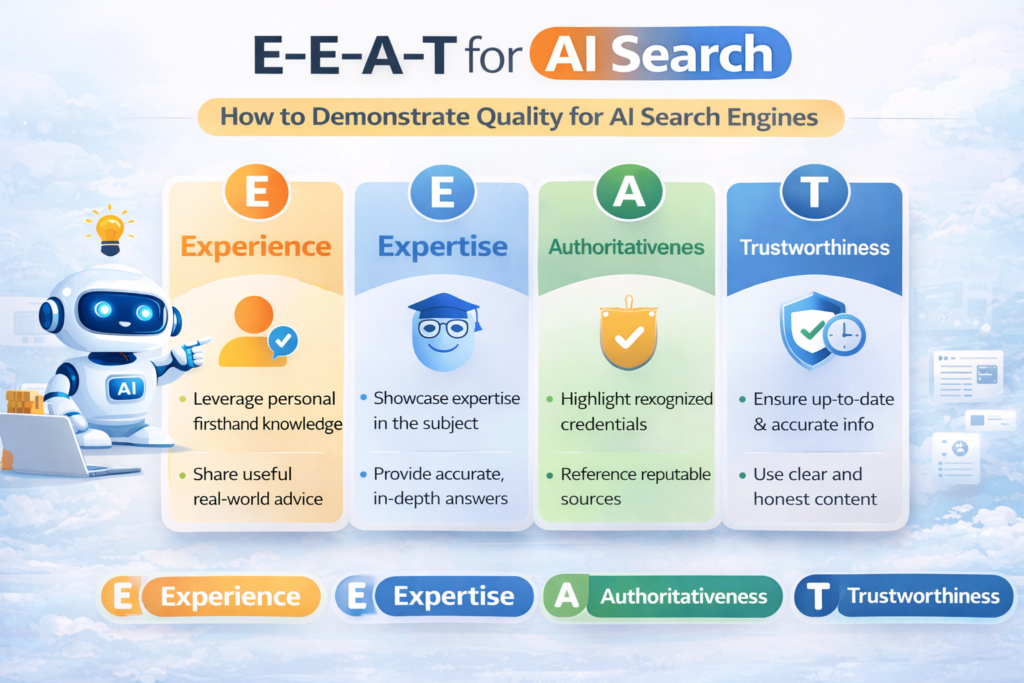
Experience refers to the practical knowledge or real involvement behind the content. Search engines value content written by people who have real-world understanding of a topic.
Example signals:
- Personal insights or real examples
- Case studies or practical explanations
Expertise means the level of knowledge and skill the content creator has in a specific subject. Content written by knowledgeable authors is more likely to be trusted by search engines and AI systems.
Why it matters:
- Shows subject knowledge
- Improves credibility of the content
Authoritativeness refers to how well a website or author is recognized as a reliable source in a specific field. Websites with strong authority are more likely to appear in search results and AI answers.
Factors that improve authority:
- High-quality content
- Mentions from other reputable sites
Trustworthiness focuses on whether the information is accurate, transparent, and reliable. AI search systems prioritize content that users can confidently rely on.
Important trust signals:
- Clear author information
- Accurate and verified content
Optimization for E-E-A-T
To improve E-E-A-T signals for AI search:
- Author profiles – Show the expertise and background of the writer.
- Citations – Reference reliable studies or sources.
- Reliable sources – Use trusted websites and factual information.
Strengthening these signals helps content become more credible for both users and AI search engines.
Topical Authority Building
Topical authority means building strong expertise around a specific topic or niche. In Generative Engine Optimization (GEO), AI search engines prefer websites that cover a topic in depth rather than publishing random or unrelated content. When a website consistently publishes high-quality content around one subject, search engines and AI systems start recognizing it as a reliable source of information.
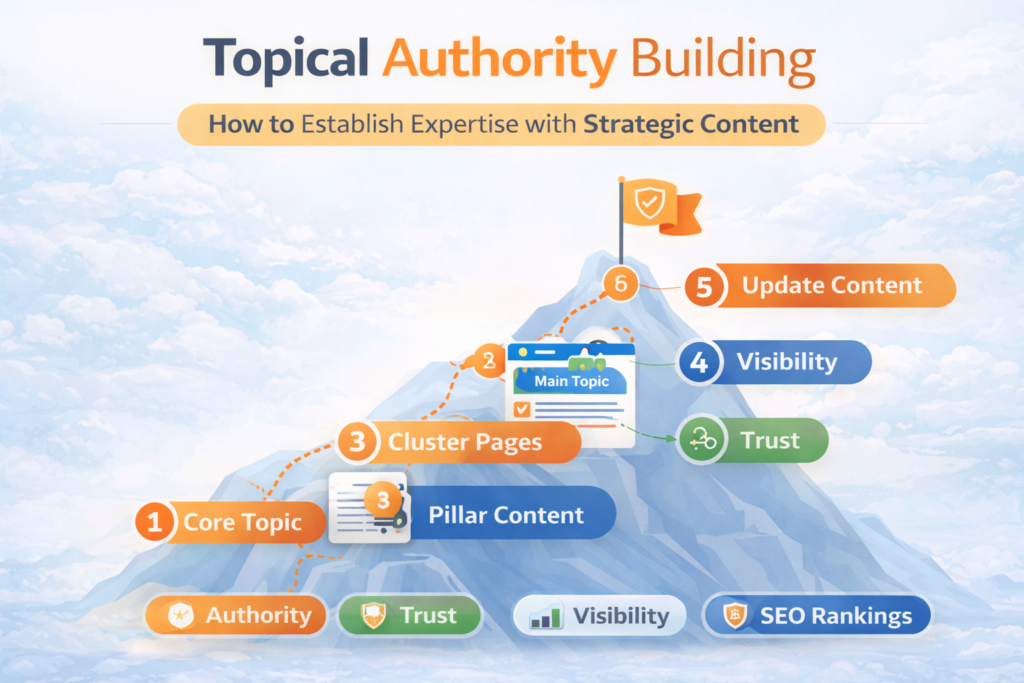
What Is Topical Authority?
Topical authority is the process of creating multiple pieces of content around a main topic and its related subtopics. This helps search engines understand that your website has strong knowledge and expertise in that area.
Benefits:
- Improves content credibility
- Increases chances of appearing in AI-generated answers
How to Build Topical Authority?
To build topical authority, websites should focus on covering a topic from different angles and perspectives.
Best practices:
- Create a main pillar page for the core topic
- Publish supporting articles on related subtopics
- Connect related content with internal links
Example of Topic Clustering
| Main Topic | Supporting Topics |
|---|---|
| Generative Engine Optimization | GEO keyword research |
| GEO content optimization | |
| GEO vs SEO | |
| AI search ranking factors |
This structure helps search engines and AI systems understand the relationship between topics, which strengthens topical authority and improves visibility in AI search results.
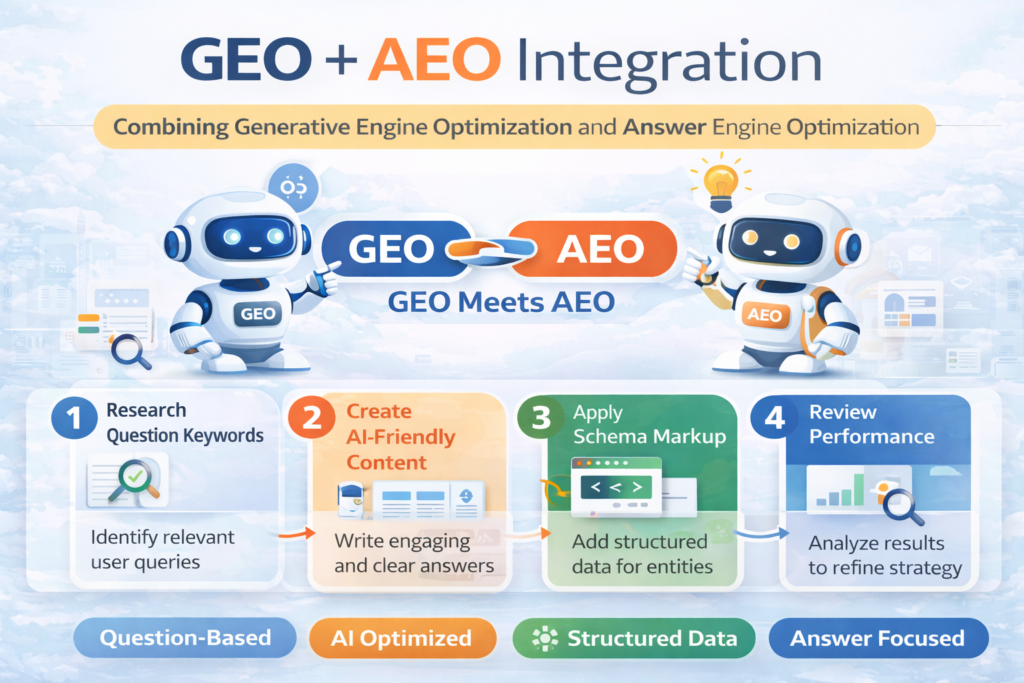
GEO + AEO Integration
Modern search is evolving quickly with the rise of AI-powered search engines and answer engines. Because of this shift, future SEO is no longer only about ranking webpages. It now combines SEO, Answer Engine Optimization (AEO), and Generative Engine Optimization (GEO) to deliver clear answers to users.
Integrating GEO with AEO helps create content that can appear in featured snippets, voice search responses, and AI-generated answers.
Featured Snippets
Featured snippets are short answers that appear at the top of search results. They provide quick information without requiring users to open a webpage.
Why they matter:
- Increase visibility in search results
- Help content appear as a direct answer
Voice Search
Voice search allows users to ask questions using voice assistants or smart devices. These queries are usually conversational and question-based.
Best practices:
- Use natural language queries
- Provide clear and concise answers
AI-Generated Answers
AI-generated answers are summaries created by AI systems using information from multiple sources. Content that is well-structured, informative, and reliable has a better chance of being used in these responses.
Question-Based Content
Question-based content is written around common user queries. This structure helps search engines easily identify answers and improves the chances of appearing in AI-generated responses.
Examples:
- What is Generative Engine Optimization?
- How does AI search work?
Using this approach helps content align with both AEO and GEO strategies, making it more effective in modern search environments.