EEAT in SEO is one of the most important concepts introduced by Google to evaluate content quality. It stands for Experience, Expertise, Authority, and Trust—factors that help determine whether your content deserves to rank higher in search results. In this guide, you’ll learn what EEAT in SEO means and how to apply it effectively.
Table of Contents
EEAT in SEO: What It Is & How to Improve It
If you want to rank higher on Google in 2026, understanding EEAT in SEO is essential.
Google no longer ranks websites based only on keywords. Instead, it focuses on content quality, credibility, and user trust. That’s where EEAT comes in.
In this guide, you’ll learn:
What EEAT is
Why it matters
How to improve it for better rankings
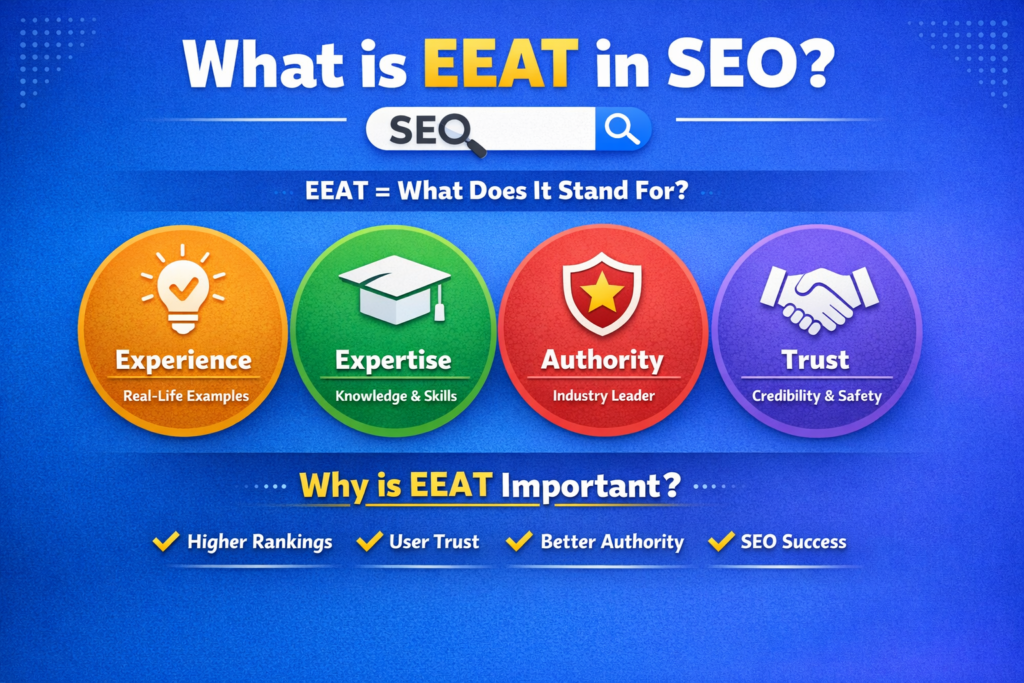
What is EEAT in SEO?
EEAT in SEO stands for:
- Experience
- Expertise
- Authority
- Trust
These are part of Google’s Search Quality Evaluator Guidelines used to assess content quality and credibility.
In simple terms:
EEAT helps Google decide whether your content is reliable enough to show to users.
Why EEAT is Important for SEO?
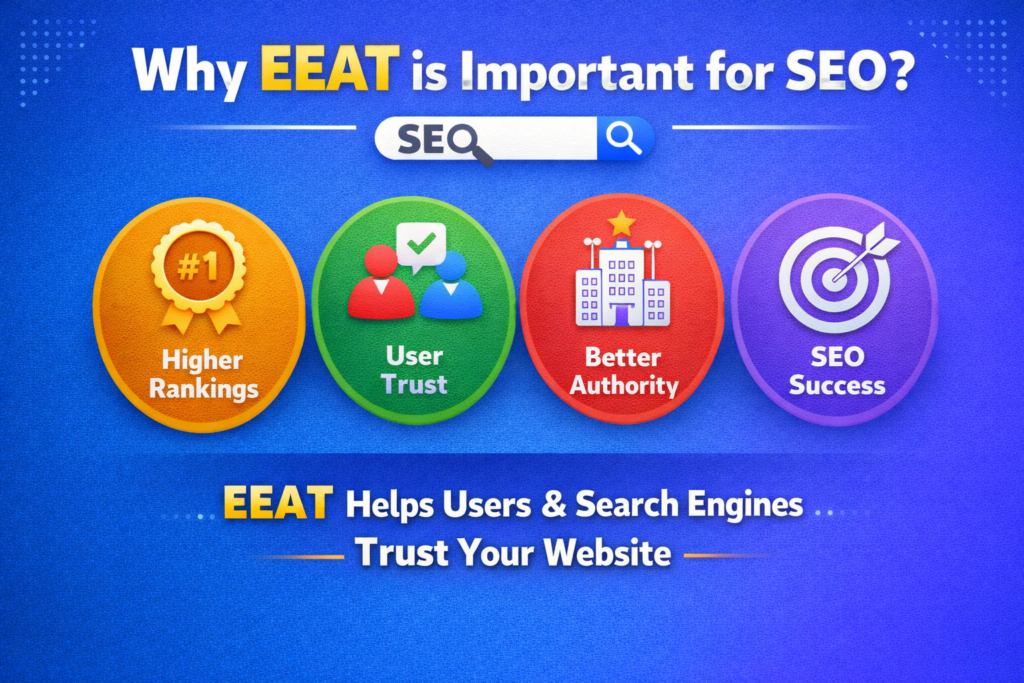
EEAT plays a crucial role in ranking because search engines want to provide accurate and trustworthy information.
Benefits of EEAT:
- Improves search rankings
- Builds user trust
- Increases click-through rate (CTR)
- Enhances brand authority
Especially important for:
- Health websites
- Finance websites
- Educational content
(These are called YMYL – Your Money Your Life topics)
Breakdown of EEAT (Step-by-Step)
1. Experience
Experience means real-life involvement or practical knowledge.
Example:
A person who has actually used a product can write better content than someone who hasn’t.
How to improve:
- Share real examples
- Add personal insights
- Use case studies
2. Expertise
Expertise refers to knowledge and skill in a specific field.
Example:
An SEO expert writing about SEO will have more credibility.
How to improve:
- Show qualifications
- Write in-depth content
- Cover topics thoroughly
3. Authority
Authority is about your reputation in your niche.
Example:
If other websites link to you, your authority increases.
How to improve:
- Build backlinks
- Get mentions on trusted sites
- Create high-value content
4. Trust
Trust is the most important factor.
Google prioritizes safe and reliable content.
How to improve:
- Use HTTPS
- Add contact information
- Show author details
- Avoid misleading content
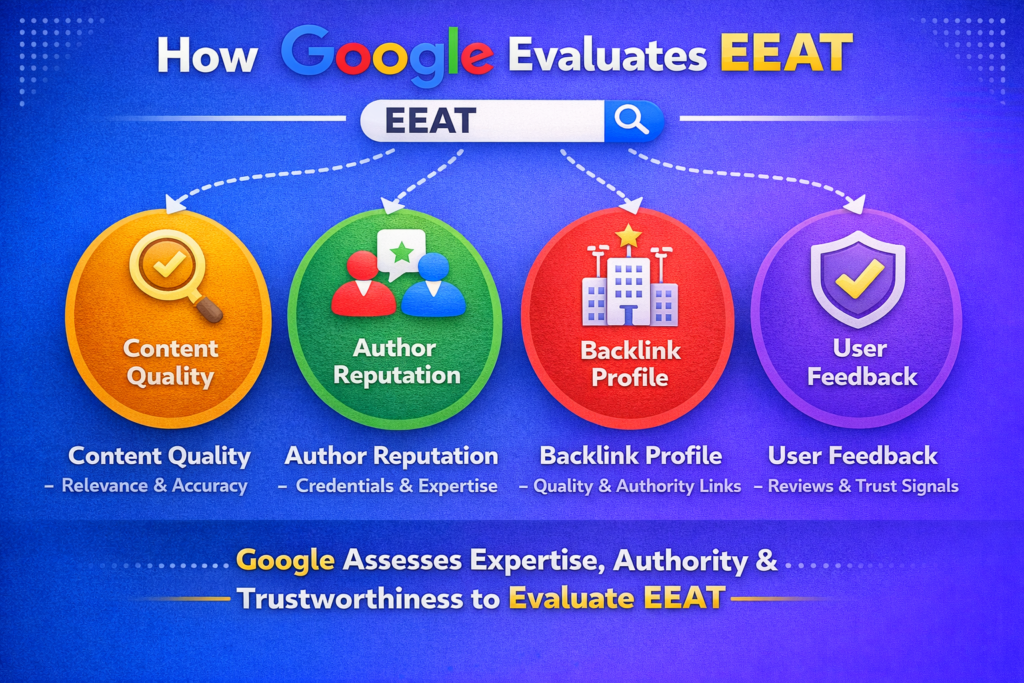
How Google Evaluates EEAT
Google does not directly score EEAT, but it uses signals like:
- Content quality
- Backlinks
- Author credibility
- Website reputation
These signals help Google understand your trustworthiness.
Practical Ways to Improve EEAT in SEO
✔ Create High-Quality Content
Write content that solves real user problems.
✔ Add Author Bio
Show who wrote the content and their expertise.
✔ Build Backlinks
Get links from authoritative websites.
✔ Improve Website UX
- Fast loading speed
- Mobile-friendly design
- Easy navigation
✔ Use Structured Data
Add schema markup to help search engines understand your content.
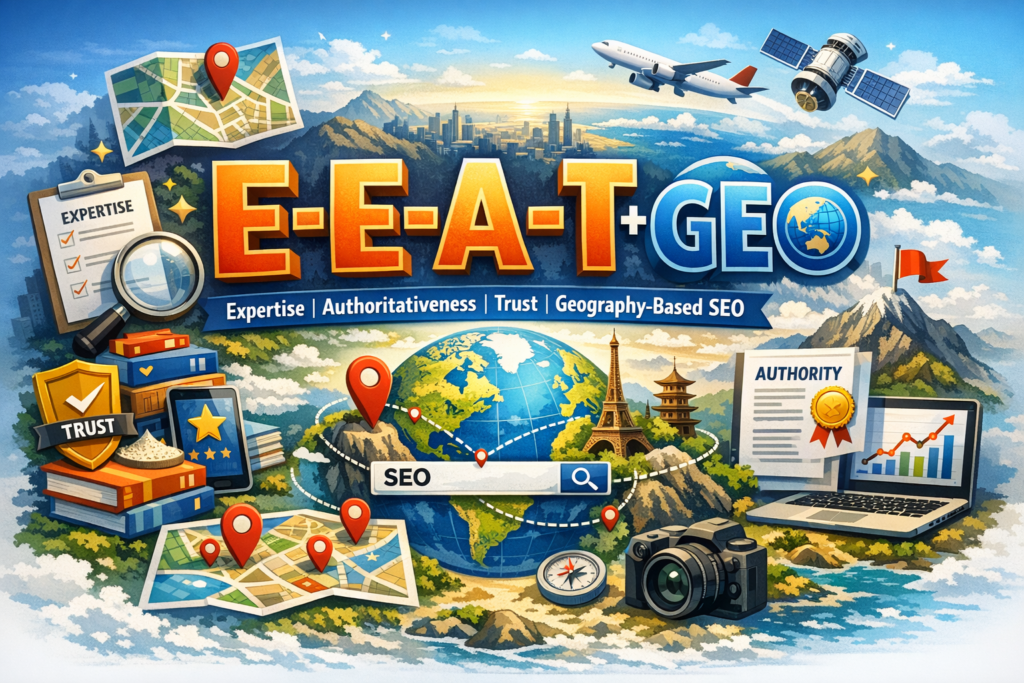
EEAT + GEO (Geographical SEO)
If your audience is location-specific (like India), you can improve EEAT by:
- Using local keywords
- Creating region-based content
- Adding local business information
This builds both trust and relevance.
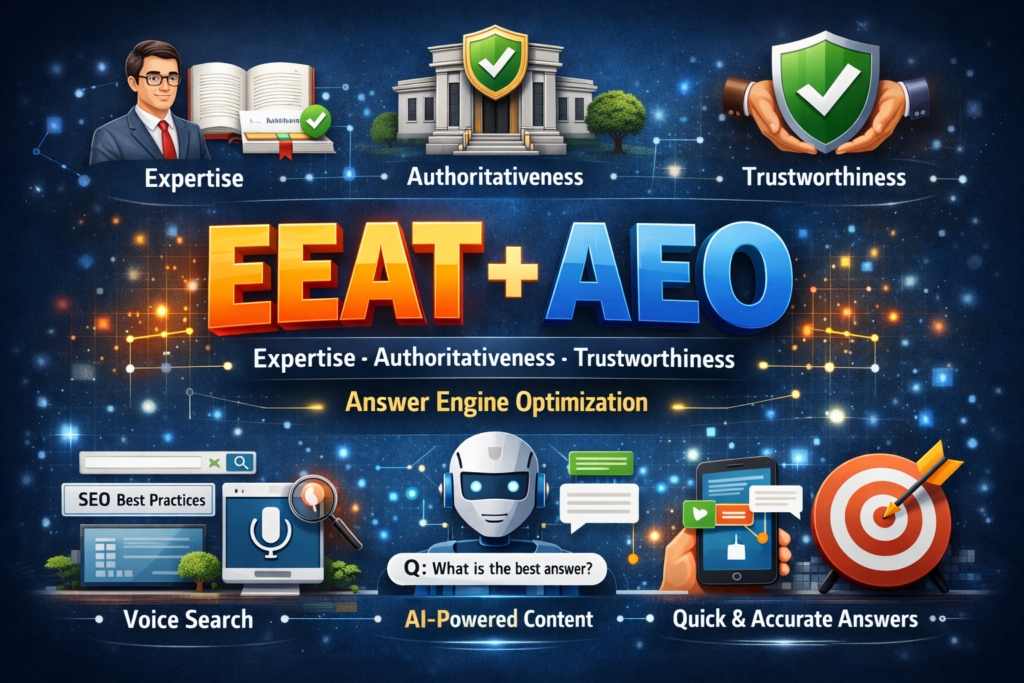
EEAT + AEO (Answer Engine Optimization)
To optimize for AEO:
- Add FAQs
- Give clear, direct answers
- Use structured headings
This helps you appear in featured snippets and voice search.
Common EEAT Mistakes to Avoid
- Writing without real knowledge
- No author information
- Low-quality backlinks
- Copy-paste content
Conclusion
In today’s evolving digital landscape, EEAT in SEO has become a core foundation for long-term success. Search engines like Google are no longer focused only on keywords—they prioritize content that demonstrates real experience, deep expertise, strong authority, and genuine trust.
If your goal is to rank higher and build a sustainable online presence, you must go beyond basic SEO practices. Simply adding keywords or writing generic content is no longer enough. Instead, you need to create content that truly helps users, answers their questions clearly, and builds confidence.
Experience ensures your content feels real and practical.
Expertise shows your knowledge and depth in the topic.
Authority builds your reputation in your niche.
Trust makes users and search engines believe in your content.
When these four elements work together, your website becomes more than just a content platform—it becomes a reliable source of information.
From an SEO perspective, strong EEAT signals can lead to:
- Higher rankings on search engines
- Better click-through rates (CTR)
- Increased user engagement
- Stronger brand credibility
From a GEO (Geographical SEO) angle, building trust within a specific region (like India) can further improve your visibility in local search results. Creating localized, relevant, and culturally aligned content helps you connect better with your audience.
From an AEO (Answer Engine Optimization) perspective, structuring your content with clear answers, FAQs, and well-organized headings increases your chances of appearing in featured snippets, voice search, and AI-driven search results.