
What Is On Page SEO? Full Checklist with Examples
On-page SEO is one of the most important aspects of search engine optimization that focuses on optimizing individual web pages to improve their visibility, relevance, and performance in search engine results. It involves refining content, HTML elements, and overall user experience so that both users and search engines can easily understand what your page is about.
In today’s competitive online landscape, simply writing content is not enough to rank on search engines. Your content must be properly structured, optimized, and aligned with user intent. This is where on-page SEO plays a crucial role, as it directly impacts your rankings, organic traffic, and user engagement. A well-optimized page not only helps you rank higher but also keeps users on your website longer, increasing the chances of conversions.
On-page SEO is the foundation of ranking on Google. Without it, even the best content may fail to rank. In this guide, you will learn exactly what on-page SEO is, why it matters, and how to implement it using a complete checklist along with real examples.
Table of Contents
What Is On Page SEO?
On-page SEO refers to the process of optimizing individual web pages to improve their search engine rankings and enhance user experience. It includes everything from content quality and keyword usage to meta tags, headings, internal linking, and page speed.
Unlike off-page SEO, which focuses on external factors like backlinks, on-page SEO gives you full control over how your content is structured and presented. By optimizing these elements correctly, you make it easier for search engines to understand your content and for users to find exactly what they are looking for.
At its core, on-page SEO is about creating high-quality, relevant, and user-friendly content that satisfies search intent while following best optimization practices.
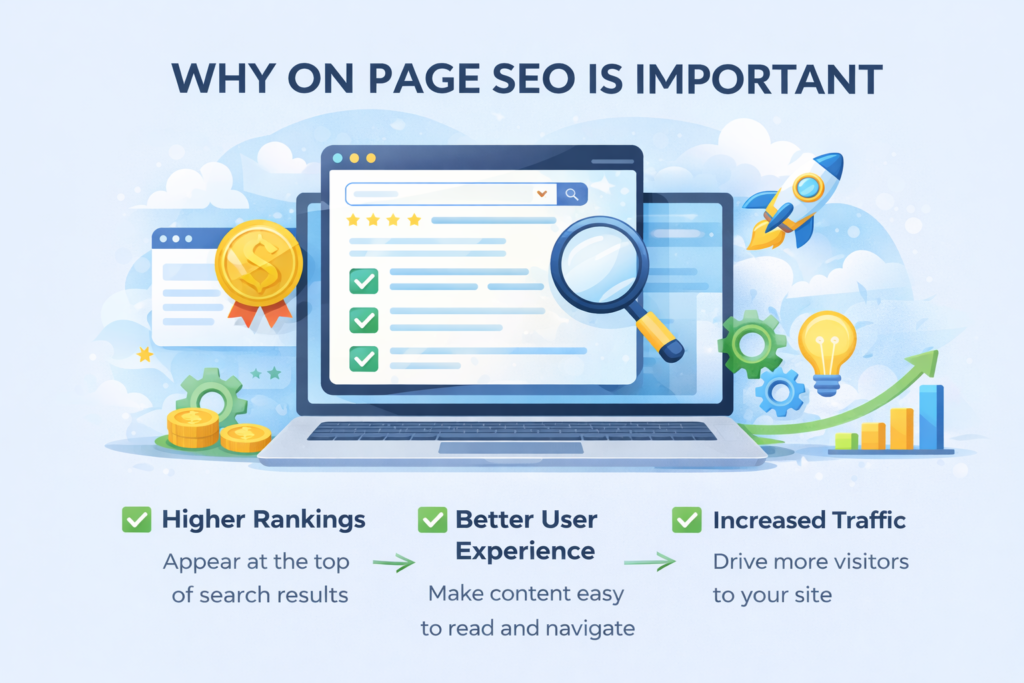
Why On Page SEO Is Important
On-page SEO is essential because it directly influences how your website performs in search engine results. When your pages are properly optimized, search engines can easily crawl, understand, and rank your content for relevant queries.
A well-optimized page improves your visibility, helping your content appear higher in search results where users are more likely to click. It also enhances user experience by making your content easier to read, navigate, and understand. This leads to lower bounce rates, higher engagement, and better overall performance.
Additionally, on-page SEO increases your chances of earning featured snippets and appearing in AI-generated search results, making it a key factor in both traditional SEO and modern search experiences.
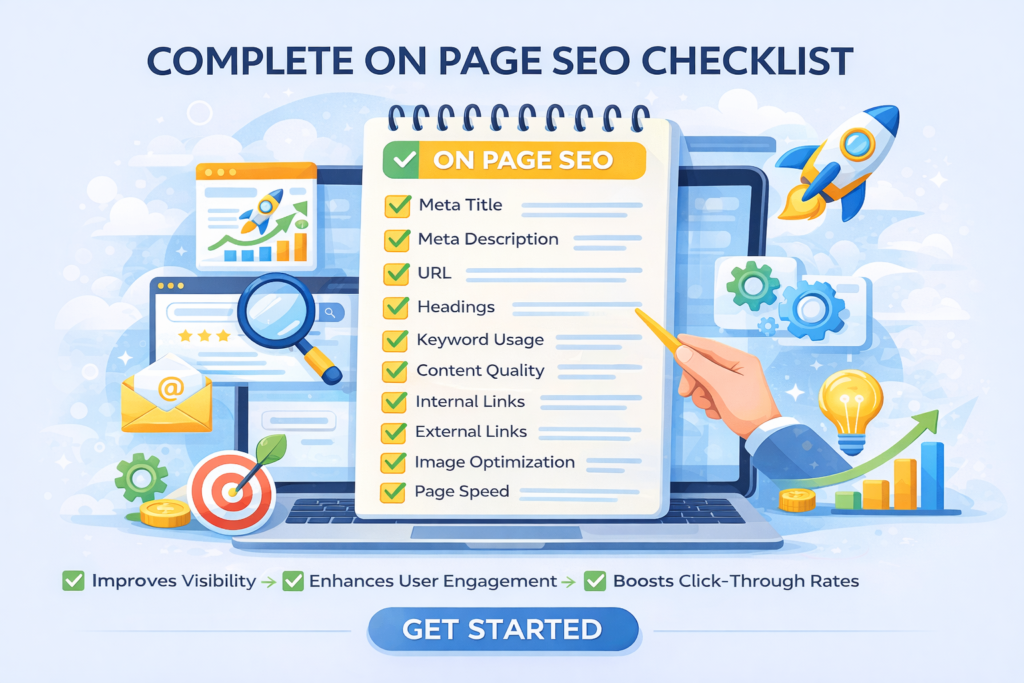
Complete On Page SEO Checklist
The complete on-page SEO checklist is a step-by-step framework that helps you optimize every important element of a web page to improve its visibility, relevance, and overall performance in search engine results. It covers everything from title tags, meta descriptions, and URL structure to content quality, keyword placement, internal linking, and user experience. By following this checklist, you ensure that your page is not only search engine friendly but also valuable and easy to understand for users. Implementing these on-page SEO practices consistently helps improve rankings, increase organic traffic, and create a strong foundation for long-term SEO success.
| SL | Checklists | Description |
| 1 | Meta Title | A clear and keyword-focused title that improves search rankings and attracts clicks from users. |
| 2 | Meta Description | A short summary of your page that includes the keyword and encourages users to click. |
| 3 | URL Structure | A clean, short, and keyword-rich URL that is easy to read and understand. |
| 4 | Image Optimization | Optimize images with proper alt text, file names, and compressed size for better speed and SEO. |
| 5 | Target Keyword Use Naturally | Use your main keyword naturally in the content without forcing or overusing it. |
| 6 | Plagiarism | Ensure your content is 100% unique and original to avoid penalties and build trust. |
| 7 | Heading Tag Optimization | Use proper H1, H2, and H3 tags to structure content and improve readability. |
| 8 | Keyword Density | Maintain a balanced keyword usage to avoid keyword stuffing while keeping relevance. |
| 9 | Internal Link | Link to relevant pages within your website to improve navigation and SEO. |
| 10 | External Link | Link to high-quality external sources to increase content credibility and trust. |
| 11 | Keyword Placement | Place keywords strategically in title, headings, and early content for better ranking. |
| 12 | Grammar | Use correct grammar and clear language to improve readability and user experience. |
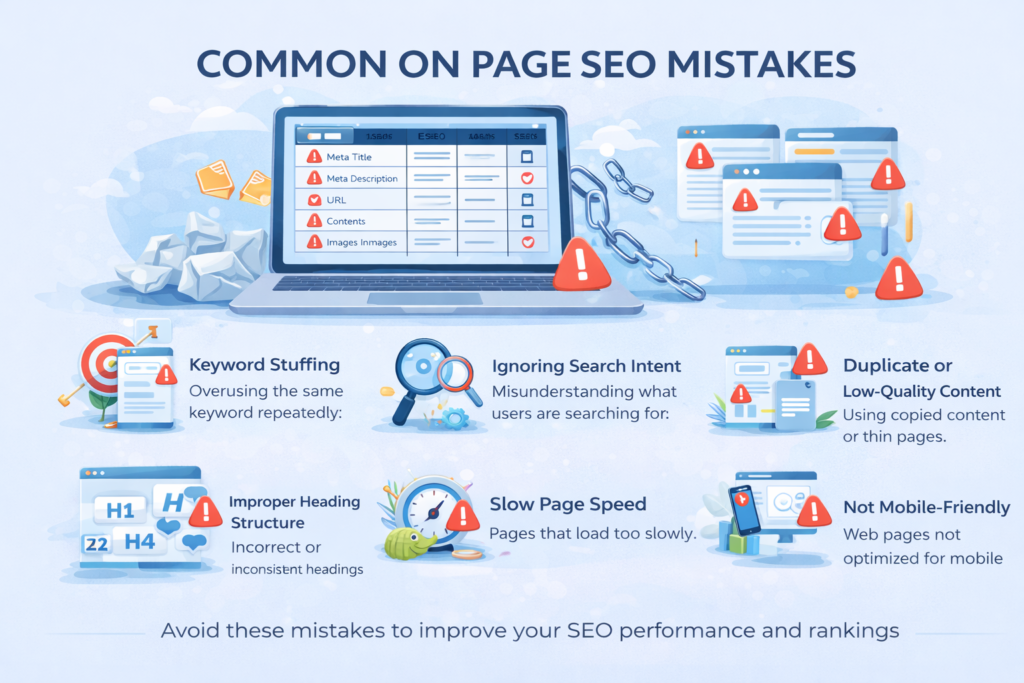
Common On Page SEO Mistakes
- Keyword Stuffing
Overusing the same keyword repeatedly makes the content look unnatural, reduces readability, and can negatively impact rankings instead of improving them. - Ignoring Search Intent
Creating content that does not match what users are actually searching for leads to low engagement and poor ranking performance. - Duplicate or Low-Quality Content
Copying content or publishing thin, low-value content can harm your SEO and reduce your website’s credibility. - Missing or Poor Meta Tags
Not optimizing title tags and meta descriptions can result in lower click-through rates and missed ranking opportunities. - Improper Heading Structure
Using headings incorrectly or skipping hierarchy (H1, H2, H3) makes content harder to read and understand for both users and search engines. - Slow Page Speed
Heavy images, unnecessary scripts, or poor hosting can slow down your website, leading to higher bounce rates and lower rankings. - Not Mobile-Friendly
A website that is not optimized for mobile devices provides a poor user experience and loses ranking potential. - Poor Internal Linking
Not linking relevant pages within your site reduces crawlability and weakens your overall SEO structure. - Over-Optimization
Forcing keywords into every section or over-optimizing elements can make content look spammy and harm rankings. - Missing Image Optimization
Not using alt text, proper file names, or compressed images can affect both SEO and page loading speed. - Weak Content Structure
Long paragraphs without proper spacing, headings, or formatting reduce readability and user engagement. - Ignoring User Experience (UX)
Focusing only on SEO without considering readability, design, and usability can drive users away from your page.
Conclusion
On-page SEO is the foundation of a successful SEO strategy, as it directly influences how your content is understood, ranked, and experienced by users. By focusing on quality content, proper structure, and user-friendly optimization, you can significantly improve your website’s visibility and performance.
Implementing the checklist outlined in this guide will help you create well-optimized pages that not only rank higher but also provide real value to your audience. As search engines continue to evolve, staying consistent with on-page SEO best practices will ensure long-term growth and sustainable traffic.