
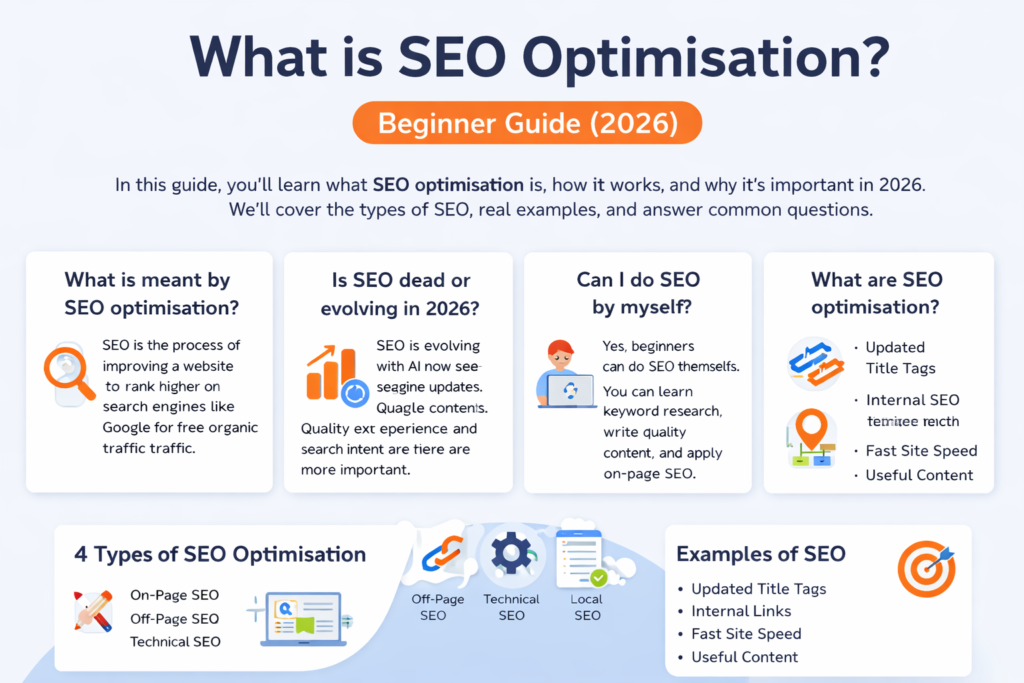
In this guide, you’ll learn what SEO optimisation is, how it works, and why it’s important in 2026. We’ll cover the types of SEO, real examples, and answer common questions like whether you can do SEO yourself and if SEO is still relevant in the AI era.
What are search Engine Optimization?
SEO optimisation (Search Engine Optimization) is the process of improving a website so that it ranks higher on search engines like Google and attracts more organic (free) traffic.
In simple words, SEO optimisation helps your website appear when people search for related topics, products, or services online.
How SEO Optimisation Works:
SEO works by helping search engines understand your content and show it to the right audience. It focuses on:
- Keywords → Using the right search terms (like what is seo optimisation)
- Content Quality → Useful, relevant, and informative content
- Website Structure → Fast, mobile-friendly, and easy to navigate
- Backlinks → Links from other websites that build authority
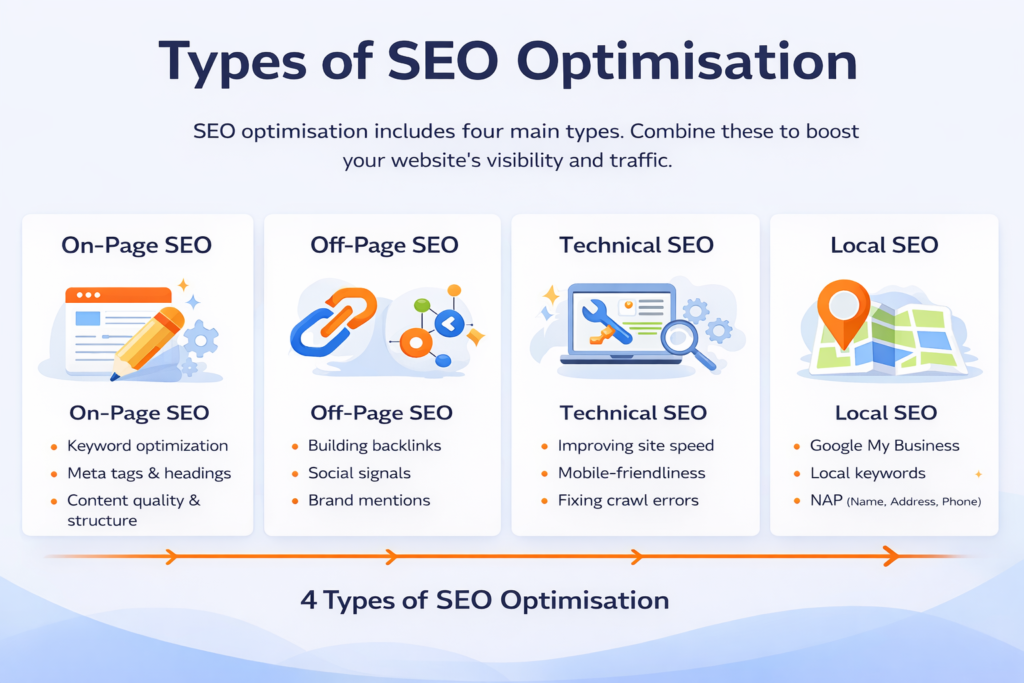
Types of SEO Optimisation:
There are mainly three types of SEO:
1. On-Page SEO
Optimizing content and elements on your website
- Title tags
- Meta descriptions
- Headings (H1, H2)
- Keyword placement
2. Off-Page SEO
Activities done outside your website
- Backlinks
- Social sharing
- Brand mentions
3. Technical SEO
Improving website performance and structure
- Page speed
- Mobile optimization
- Crawlability and indexing
Example of SEO Optimisation:
For example, if you write a blog about “What is SEO optimisation” and properly use keywords, headings, and internal links, Google may rank your page when someone searches for that term.
Why SEO Optimisation is Important (2026):
- Increases organic traffic without ads
- Builds trust and credibility
- Helps you stay visible even in AI-powered search results
- Generates long-term results
What are the 4 types of SEO?
The four main types of SEO are On-Page SEO, Off-Page SEO, Technical SEO, and Local SEO.
Key Types Explained:
- On-Page SEO – Optimizing content, keywords, headings, and meta tags on your website
- Off-Page SEO – Building backlinks and improving domain authority
- Technical SEO – Enhancing website speed, mobile-friendliness, and indexing
- Local SEO – Optimizing for location-based searches (e.g., Google Maps)
What is the best example of SEO?
A simple example of SEO is optimizing a blog post to rank higher on Google for a target keyword.
Example:
If you create a blog on “what is SEO optimisation” and:
- Use the keyword naturally
- Write high-quality content
- Optimize headings and meta tags
- Improve page speed
Your page can rank on search engines — this is SEO in action.
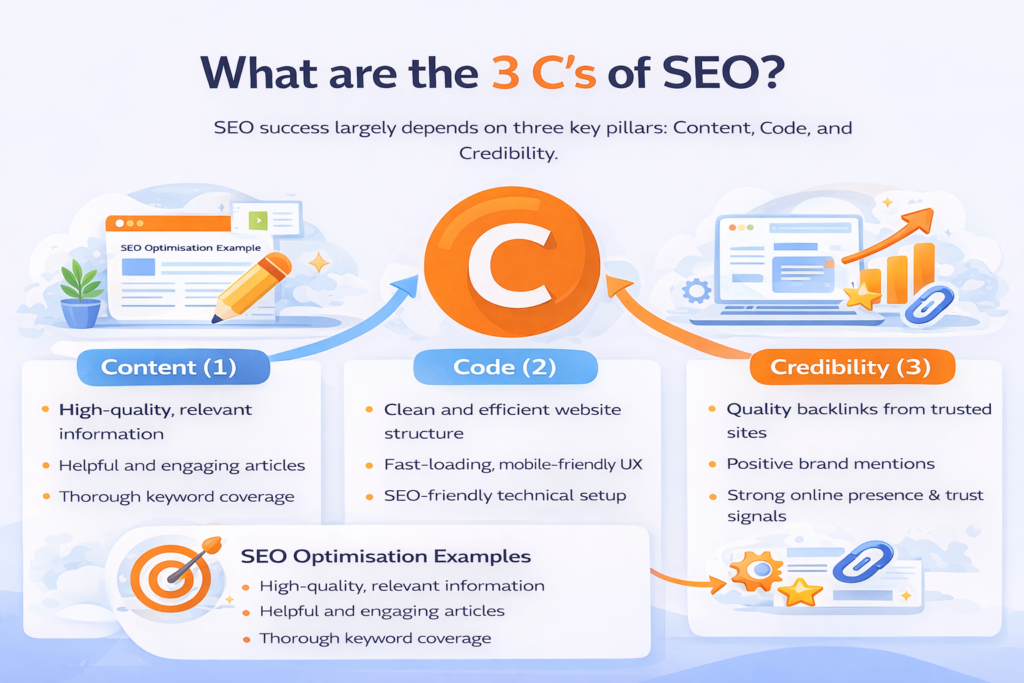
What are the 3 C’s of SEO?
The 3 C’s of SEO are Content, Code, and Credibility.
Explanation:
- Content – High-quality, relevant, and valuable information
- Code – Proper technical setup and clean website structure
- Credibility – Backlinks, authority, and trust signals
These three elements form the foundation of effective SEO.
Can I do SEO myself?
Yes, you can do SEO yourself, especially as a beginner.
How to Start:
- Learn basic keyword research
- Create helpful and optimized content
- Apply on-page SEO techniques
- Use free SEO tools
With consistency and practice, you can improve your website’s ranking over time.
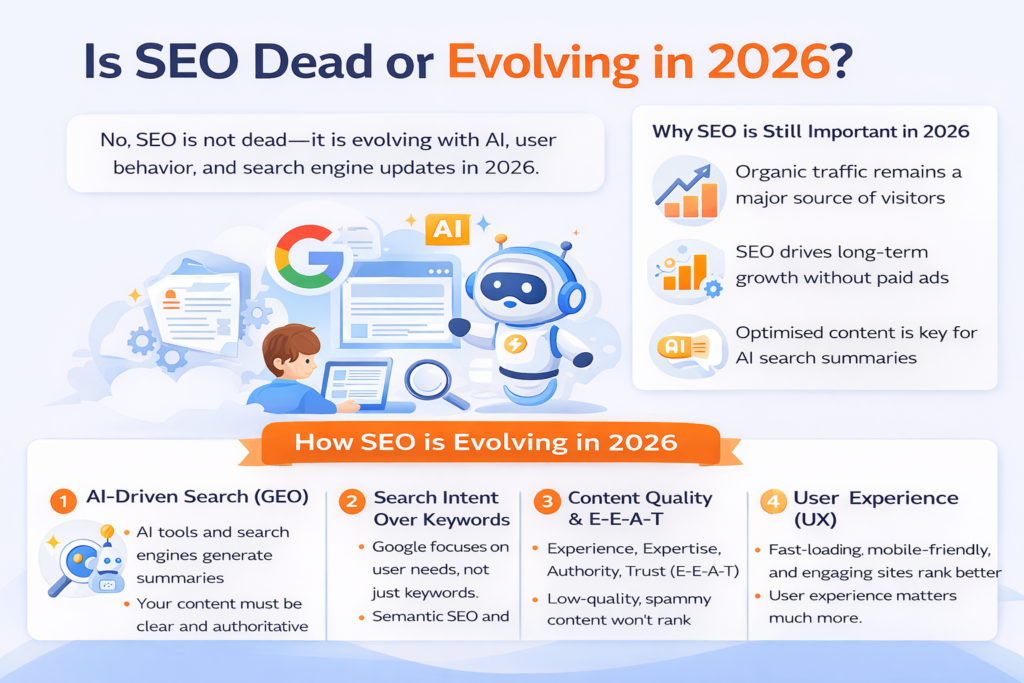
Is SEO dead or evolving in 2026?
SEO is not dead in 2026—it is evolving rapidly with AI, user behavior, and search engine updates.
Search engines like Google are becoming smarter, focusing more on user intent, content quality, and experience rather than just keywords. As a result, modern SEO is more about helping users than manipulating algorithms.
Why SEO is Still Important in 2026
- Organic traffic is still a major source of website visitors
- Businesses rely on SEO for long-term growth without paid ads
- Search engines and AI tools still need optimized content to understand and rank pages
How SEO is Evolving:
1. AI-Driven Search (GEO)
- AI tools and search engines summarize content
- Content must be clear, structured, and authoritative
2. Search Intent Over Keywords
- Google focuses on what users actually want, not just exact keywords
- Semantic SEO and topic coverage are more important
3. Content Quality & E-E-A-T
- Experience, Expertise, Authority, and Trust matter more than ever
- Low-quality or AI-spam content does not rank
4. User Experience (UX)
- Fast-loading, mobile-friendly, and easy-to-read websites perform better
- Engagement signals (time on page, bounce rate) impact rankings
What No Longer Works
- Keyword stuffing
- Spam backlinks
- Thin or copied content
These outdated tactics can harm your rankings in 2026.
Final Answer
SEO is not dead—it has transformed into a smarter, user-focused, and AI-integrated strategy.
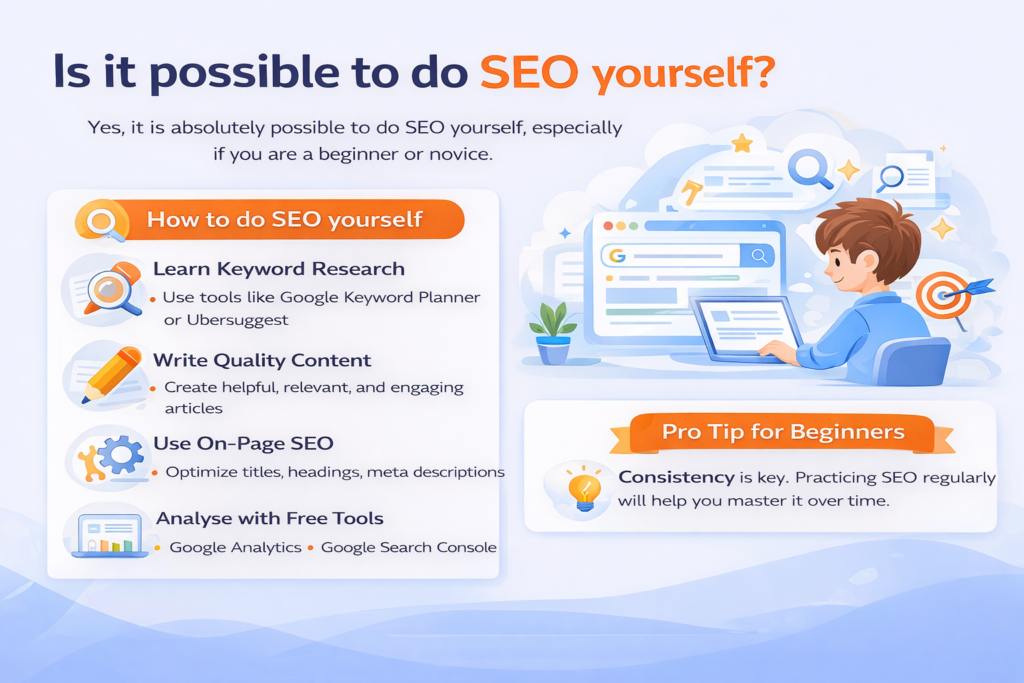
Is it possible to do SEO yourself?
Yes, it is absolutely possible to do SEO yourself, even as a beginner.
How you can start:
- Learn basic keyword research
- Create high-quality, helpful content
- Optimize titles, headings, and meta tags
- Improve website speed and mobile usability
With consistency and the right strategy, you can achieve good rankings without hiring an expert.
What is the 80/20 rule for SEO?
The 80/20 rule in SEO means that 20% of your efforts drive 80% of your results.
Focus on high-impact tasks:
- Target the right keywords
- Create valuable content
- Optimize on-page SEO
- Build quality backlinks
Instead of doing everything, focus on what brings the most traffic and rankings.
Will SEO be replaced by AI?
No, SEO will not be replaced by AI, but it is evolving with AI.
What’s changing:
- AI helps generate and summarize content
- Search engines use AI to understand intent better
- Users get answers directly in search results
However, SEO is still needed to:
- Structure content properly
- Provide accurate and trustworthy information
- Rank in both search engines and AI-driven results
Can ChatGPT do SEO?
ChatGPT can assist with SEO, but it cannot replace a complete SEO strategy.
What ChatGPT can do:
- Generate content ideas and blog posts
- Suggest keywords and outlines
- Help optimize content structure
What it cannot fully do:
- Build backlinks
- Analyze real-time competition deeply
- Replace human strategy and expertise
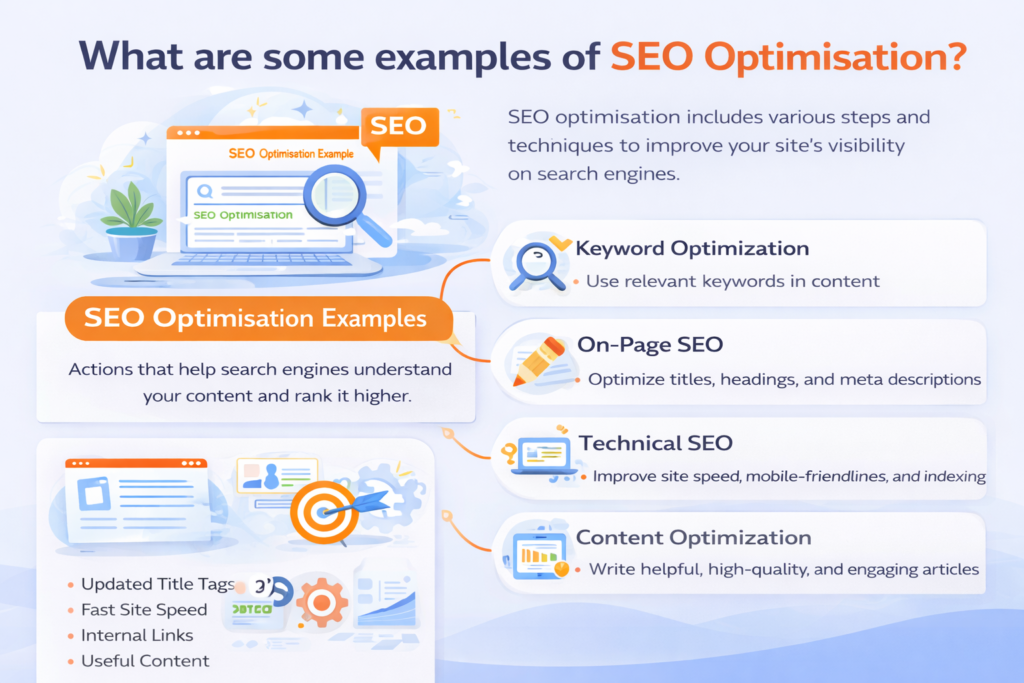
What are some examples of SEO optimisation?
SEO optimisation includes various techniques used to improve a website’s visibility on search engines.
Common examples:
- Keyword Optimization → Using relevant keywords like “what is SEO optimisation” in content
- On-Page SEO → Optimizing titles, meta descriptions, headings, and images
- Technical SEO → Improving page speed, mobile-friendliness, and site structure
- Content Optimization → Writing high-quality, helpful, and user-focused articles
- Link Building → Getting backlinks from trusted websites
These actions help search engines understand your content and rank it higher.
Can a beginner do SEO?
Yes, a beginner can learn and do SEO with the right approach and practice.
How beginners can start:
- Understand basic SEO concepts
- Learn keyword research
- Create simple, high-quality content
- Apply on-page SEO techniques
- Use free tools like Google Search Console
SEO takes time, but beginners can achieve good results with consistency and learning.
Want to learn SEO in detail?
Click the button below to explore the complete guide and advanced strategies.
Get step-by-step insights to improve your website’s ranking and traffic.
Pingback: What Is On Page SEO? Full Checklist with Examples (2026)
Thank you for your comment! 😊
You’re absolutely right—on-page SEO is all about optimizing individual pages to improve both search engine rankings and user experience. When elements like content quality, keyword placement, meta tags, and page speed are properly optimized, it becomes much easier for search engines to understand your content and for users to find value in it.
If you have any specific questions about implementing on-page SEO, feel free to ask—happy to help! 🚀