

Keyword research is a key part of SEO that helps you understand what people are searching for on Google. By finding the right keywords, you can create content that matches user intent and attracts more organic traffic to your website.
In this guide, you will learn how to do keyword research with Google using simple methods like Google Search, Autocomplete, and Google Trends to find valuable keywords for your content.
Table of Contents
Google SEO Keyword Research: Complete Beginner Guide 2026
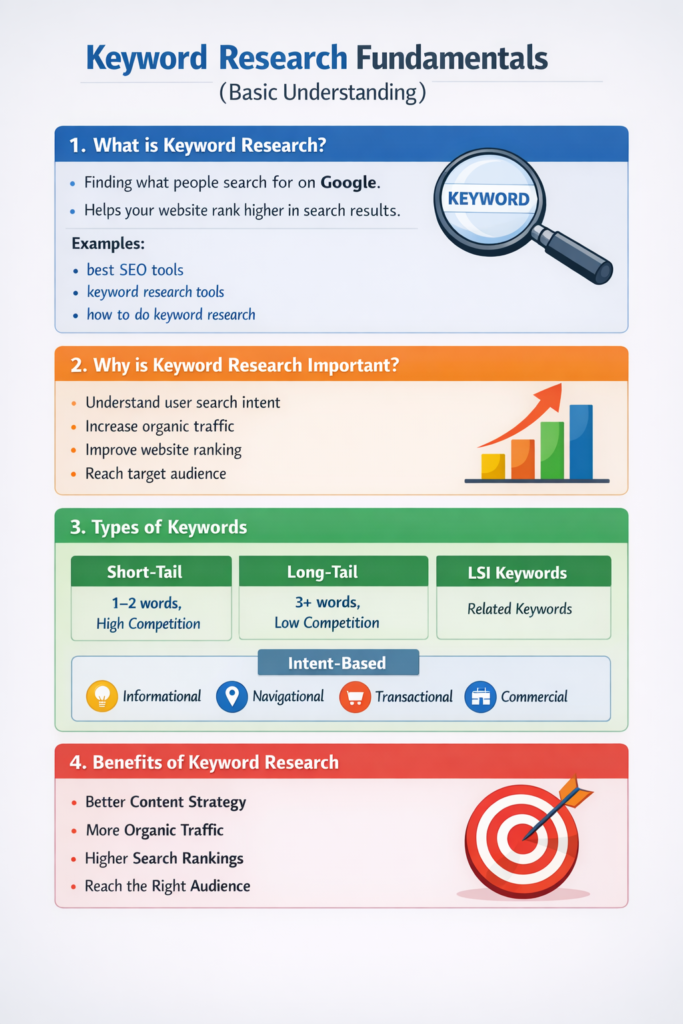
Keyword research is an important SEO process used to discover what words or phrases people type into Google when searching for information. By identifying these keywords, you can create content that matches what users are looking for. When the right keywords are used in your content, your website has a better chance of ranking higher in Google search results.
Examples:
- best SEO tools
- keyword research tools
- how to do keyword research
Why is Keyword Research Important?
Keyword research is one of the most important steps in SEO because it helps you understand what users are searching for online. When you target the right keywords, it becomes easier to create content that attracts the right audience and improves your website’s visibility.
Benefits of keyword research:
- Helps understand user search behavior
- Makes it easier to create a clear content strategy
- Increases organic traffic
- Improves website rankings on search engines
- Helps reach the target audience more effectively
Types of Keywords
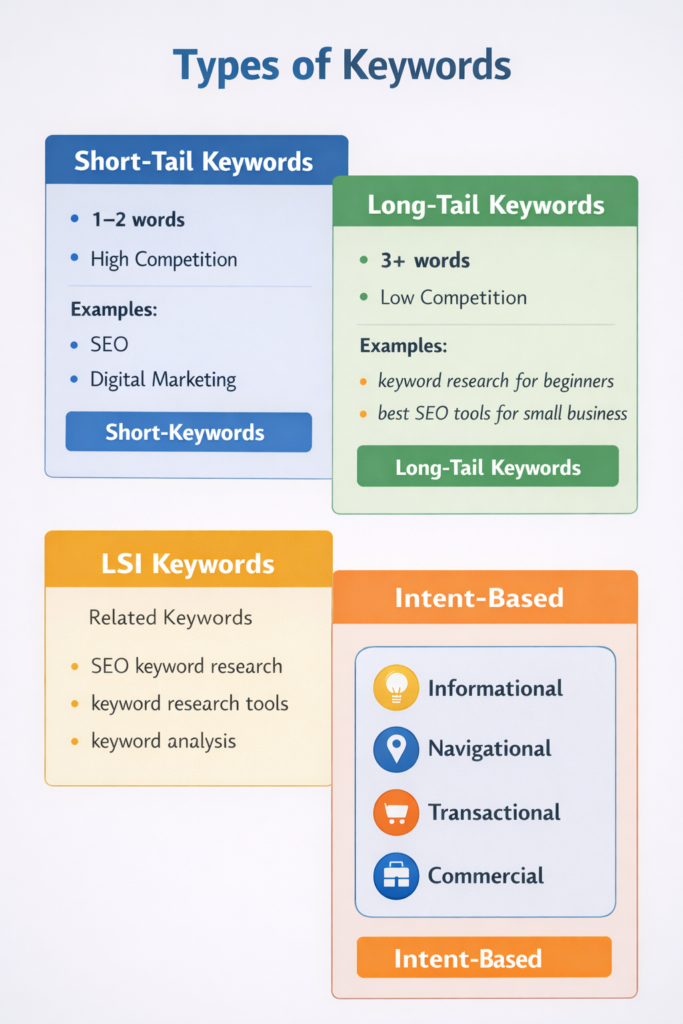
1. Short-Tail Keywords
Short-tail keywords are usually 1–2 words long and have very high search volume. However, they also have very high competition, which makes them harder to rank for.
Examples:
- SEO
- Digital Marketing
2. Long-Tail Keywords
Long-tail keywords usually contain 3–5 words or more. These keywords often have lower search volume but also lower competition, making them easier to rank for.
Examples:
- keyword research for beginners
- best SEO tools for small business
3. LSI Keywords
LSI (Latent Semantic Indexing) keywords are related terms that are closely connected to the main keyword. These keywords help search engines understand the context of your content.
Example:
Main Keyword: Keyword Research
LSI Keywords:
- SEO keyword research
- keyword research tools
- keyword analysis
4. Intent-Based Keywords
Intent-based keywords are classified based on the user’s purpose when searching on Google.
Informational Intent
The user is looking for information or learning something.
Example:
- what is keyword research
Navigational Intent
The user wants to find a specific website or brand.
Example:
- ahrefs keyword research
Transactional Intent
The user wants to buy or take action.
Example:
- buy SEO tools
Commercial Intent
The user is comparing products or services before making a decision.
Example:
- best keyword research tool
how to research keywords on google (Step by Step)
Step 1: Find Seed Keywords
Seed keywords are the main keywords that start the keyword research process. These are simple, broad terms related to your topic and help you discover more keyword ideas.
Examples:
- SEO
- Keyword Research
- Digital Marketing
These keywords act as the foundation of your keyword research strategy.
Step 2: Use Google Suggest
When you type a keyword into the Google search bar, Google automatically shows suggestions based on real user searches. These suggestions are valuable because they reflect what people are actually searching for.
Example:
Keyword: keyword research
Google Suggestions:
- keyword research tools
- keyword research for SEO
- keyword research free
These suggestions can help you discover new keyword ideas with real search demand.
Step 3: Competitor Analysis
Competitor analysis is an important step in keyword research. By analyzing competitor websites, you can find the keywords they are ranking for and identify opportunities for your own content.
Popular Tools:
With these tools, you can analyze:
- competitor keywords
- organic traffic
- top ranking pages
This helps you understand which keywords are driving traffic in your niche.
Step 4: Analyze Keyword Metrics
Before choosing a keyword, it is important to evaluate some key metrics.
Search Volume
Search volume shows how many times a keyword is searched each month.
Example:
keyword research tools → 10K searches per month
Keyword Difficulty (KD)
Keyword difficulty indicates how hard it is to rank for a keyword.
- Low KD = easier to rank
- High KD = harder to rank
CPC (Cost Per Click)
CPC refers to the cost advertisers pay for each click in Google Ads.
A high CPC usually means the keyword has strong commercial value.
Step 5: Find Long-Tail Keywords
Long-tail keywords are longer and more specific search phrases. These keywords usually have lower competition and are easier to rank for.
Example:
Main Keyword:
keyword research
Long-Tail Keywords:
- keyword research for beginners
- how to do keyword research for SEO
- free keyword research tools
Targeting long-tail keywords can help attract more relevant and targeted traffic.
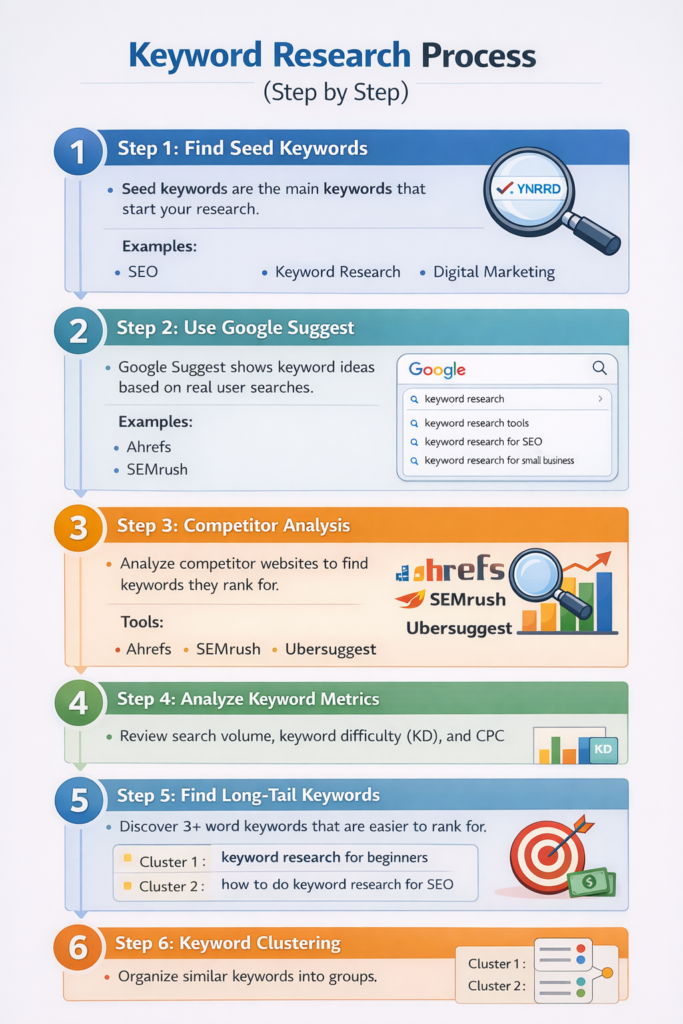
Step 6: Keyword Clustering
Keyword clustering is the process of grouping similar keywords together. This strategy allows one piece of content to rank for multiple related keywords.
Example:
Cluster 1
- keyword research
- SEO keyword research
- keyword research strategy
Cluster 2
- keyword research tools
- best keyword research tools
- free keyword research tools
By using keyword clustering, a single page can rank for multiple keywords, improving overall SEO performance and visibility in search results.
Advanced Keyword Research Strategy
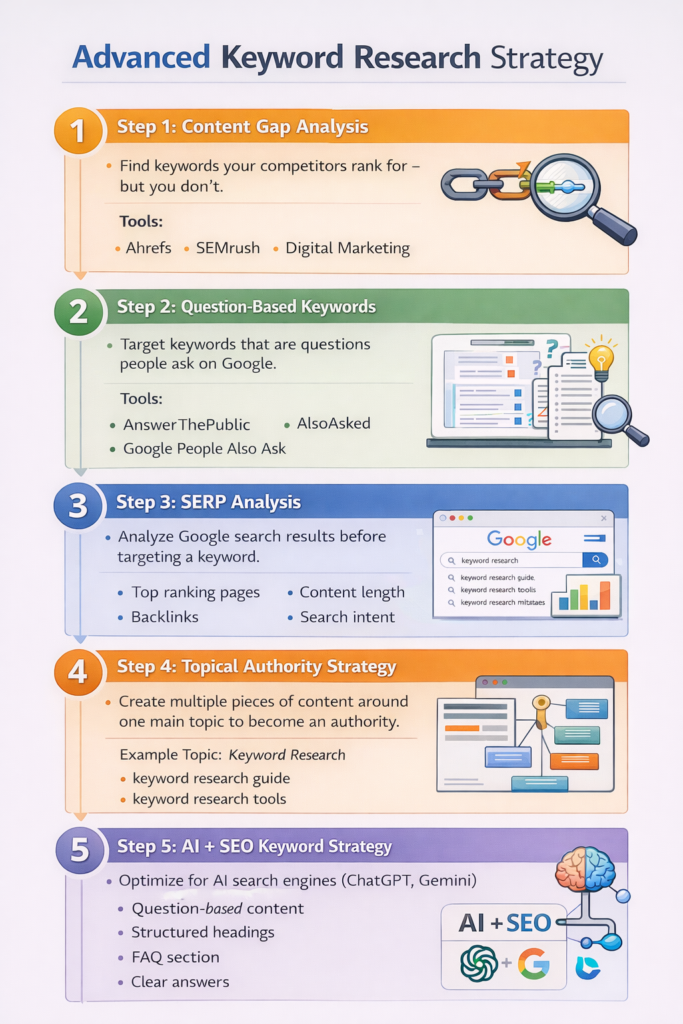
1. Content Gap Analysis
Content gap analysis helps you find keywords your competitors are ranking for but your website is not. By identifying these gaps, you can create new content that targets those keywords and attract more organic traffic.
Tools:
- Ahrefs
- SEMrush
These tools help you discover new keyword opportunities and content ideas in your niche.
2. Question-Based Keywords
Many users search on Google using questions. Targeting these question-based keywords helps your content match user intent and increases the chance of appearing in featured snippets.
Examples:
- how to do keyword research
- why keyword research is important
- what is keyword research in SEO
Tools:
- AnswerThePublic
- AlsoAsked
- Google “People Also Ask” section
Using question-based keywords can improve SEO, UX, and Answer Engine Optimization (AEO).
3. SERP Analysis
Before targeting a keyword, it is important to analyze the Search Engine Results Page (SERP) on Google. This helps you understand what type of content is already ranking.
Things to analyze:
- Top ranking pages
- Content length
- Backlinks
- Search intent
By studying the SERP, you can create better and more relevant content than your competitors.
4. Topical Authority Strategy
Topical authority means creating multiple pieces of content around one main topic. When you consistently publish content about a specific topic, Google starts recognizing your website as an authority in that niche.
Example Topic: Keyword Research
Content Ideas:
- keyword research guide
- keyword research tools
- keyword research mistakes
- keyword research strategy
This strategy helps improve website credibility and overall search rankings.
5. AI + SEO Keyword Strategy
With the growth of AI search tools like ChatGPT and Google Gemini, optimizing content for Answer Engine Optimization (AEO) is becoming increasingly important.
Strategies for AI-driven SEO:
- Create question-based content
- Use structured headings (H1, H2, H3)
- Add an FAQ section
- Provide clear and direct answers
This helps your content appear in AI-generated results and answer engines.
Best Keyword Research Tools
Free Tools
- Google Keyword Planner
- Ubersuggest
- Keyword Surfer
- Google Trends
Paid Tools
- Ahrefs
- SEMrush
- Moz
- KWFinder
These tools help you analyze keyword difficulty, search volume, and competitor keywords.
Common Keyword Research Mistakes
Many beginners make mistakes during keyword research, which can prevent their content from ranking well.
Common mistakes include:
- Targeting high-competition keywords that are difficult to rank for
- Ignoring search intent
- Using keyword stuffing instead of natural content
- Skipping competitor analysis
- Not targeting long-tail keywords
Avoiding these mistakes will help improve SEO performance, user experience, and content quality.
google seo keyword analysis (Conclusion)
Keyword research is the foundation of SEO. Choosing the right keywords helps your website rank higher on Google and attract more organic traffic.
To perform effective keyword research, it is important to focus on:
- Using proper keyword research tools
- Analyzing competitors
- Understanding search intent
- Targeting long-tail keywords
By following these strategies, you can create better content, improve your search rankings, and achieve long-term SEO success.
Pingback: What is SEO Optimisation? Beginner Guide (2026)
Thanks for your comment
Find Seed Keywords: Start by brainstorming topics related to your niche and using Google autocomplete or YouTube suggestions to find initial ideas. Use Tools: Use free tools like Google Keyword Planner or Ubersuggest to check how many people are searching for those terms (Volume) Pick Low Competition: Select long-tail keywords (3+ words) that have decent search volume but low competition to rank faster.